Free WEBP to PLY Converter

Convert WEBP to PLY online for free with high-quality results. This web based file converter works in your browser with no software download required on your device and produces clean, compatible PLY files suitable for 3D printing and editing workflows.

What You Get with Meshy's Image to 3D Converter

AI Generates Geometry

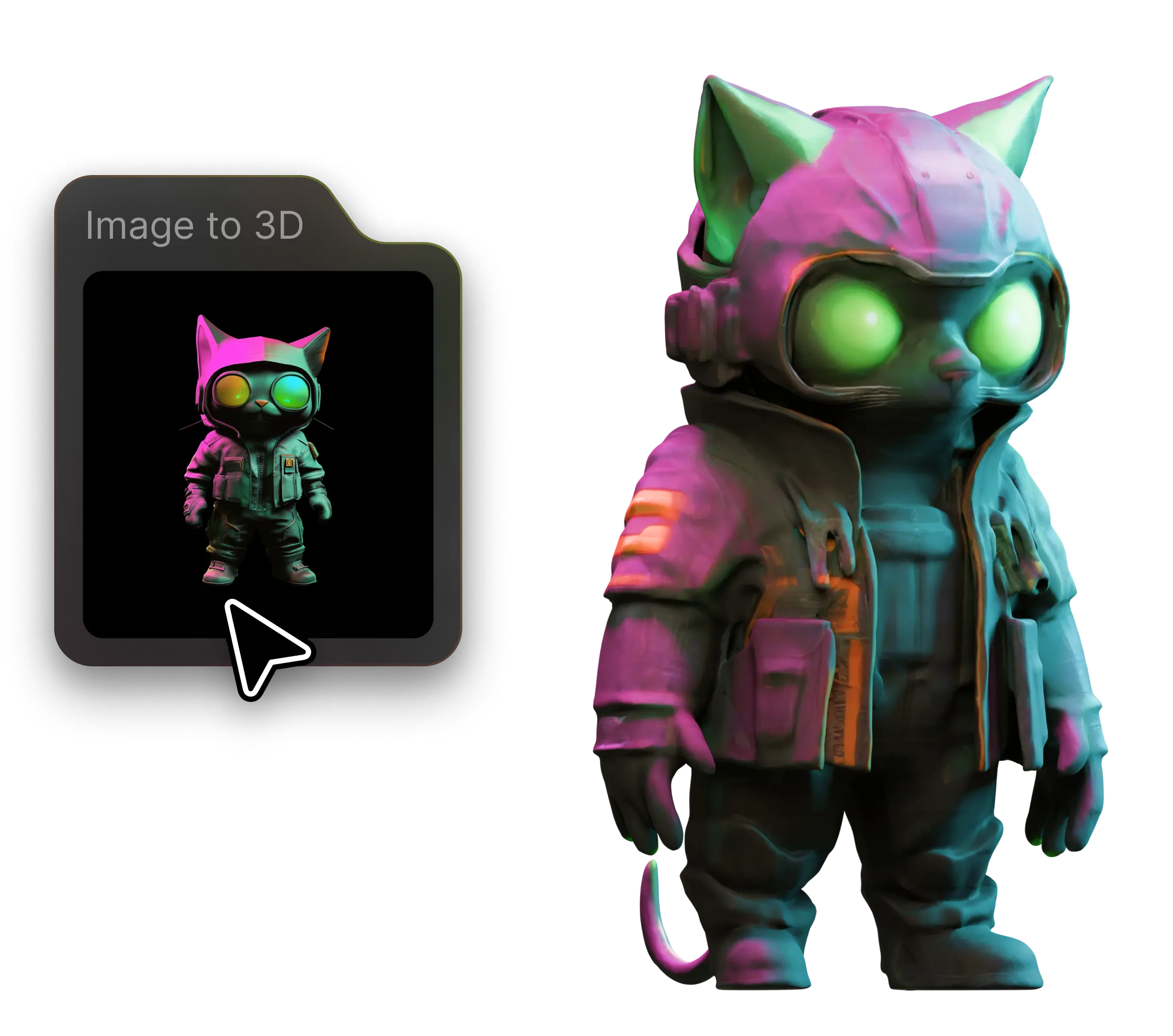
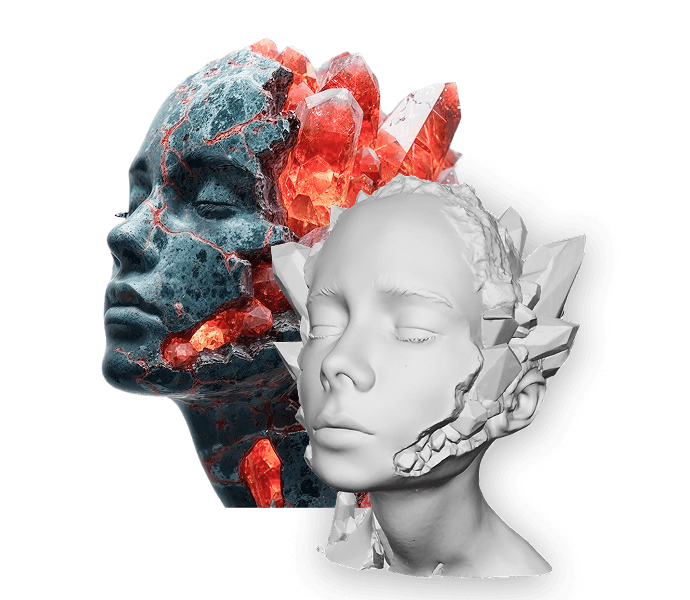
Upload a single JPG, PNG or WEBP and Meshy's AI builds real 3D geometry from it — not a flat extrusion, but a full model with depth and volume.

Wide Range of Styles

Turn photos, concept art, logos and illustrations into 3D with stylized outputs that keep your source's character.

No Install, No Signup

Everything works in the browser: upload an image, the AI generates your model online, and you download a ready-to-use 3D file.

Everything You Need to Convert 3D Files

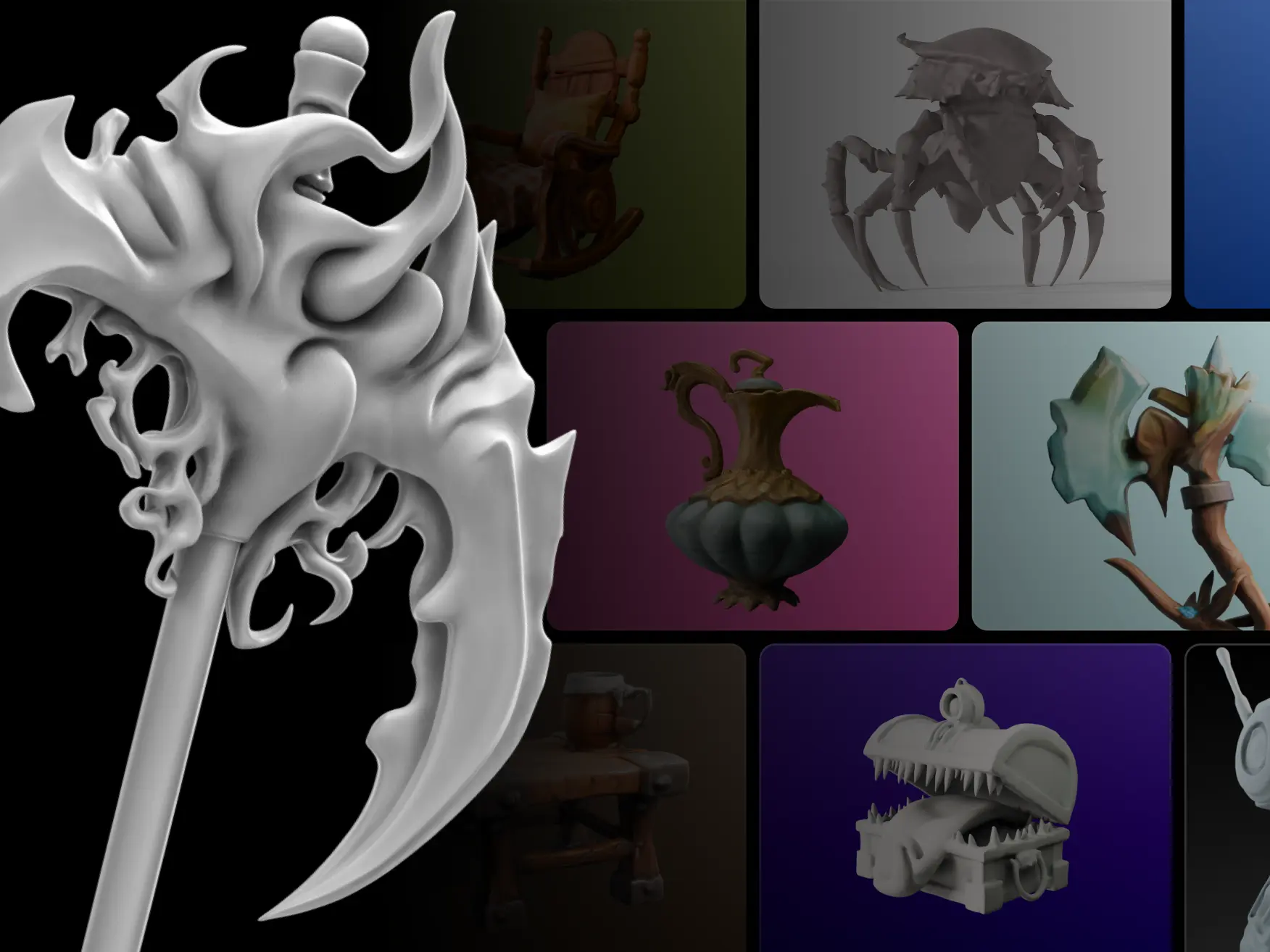
Intricate geometry details

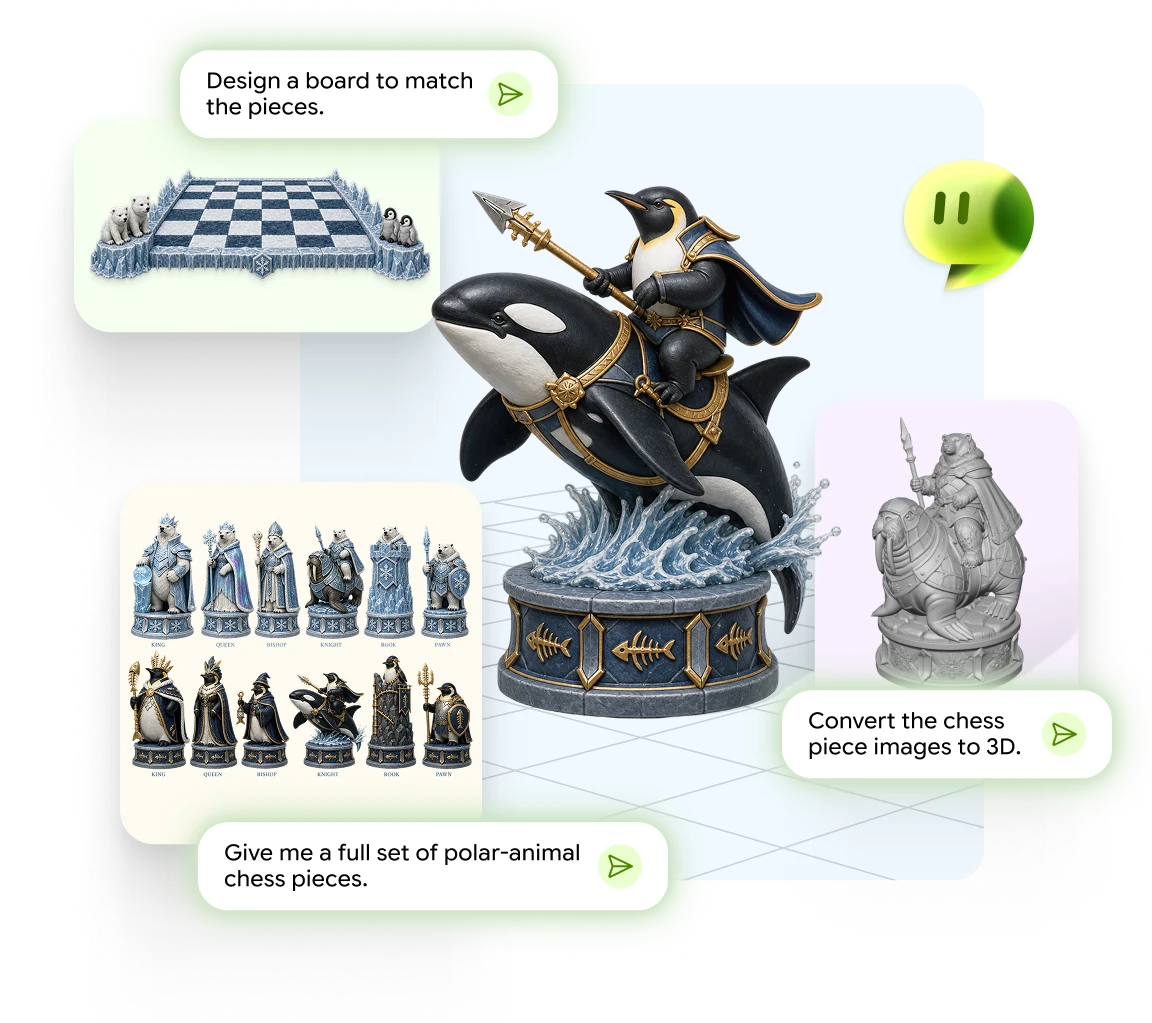
Preserve complex geometric structures during conversion with our AI technology. Experience breathtaking realism with intricate mesh details, ensuring your 3D models maintain the precision of their original 2D images.

Intricate geometry details
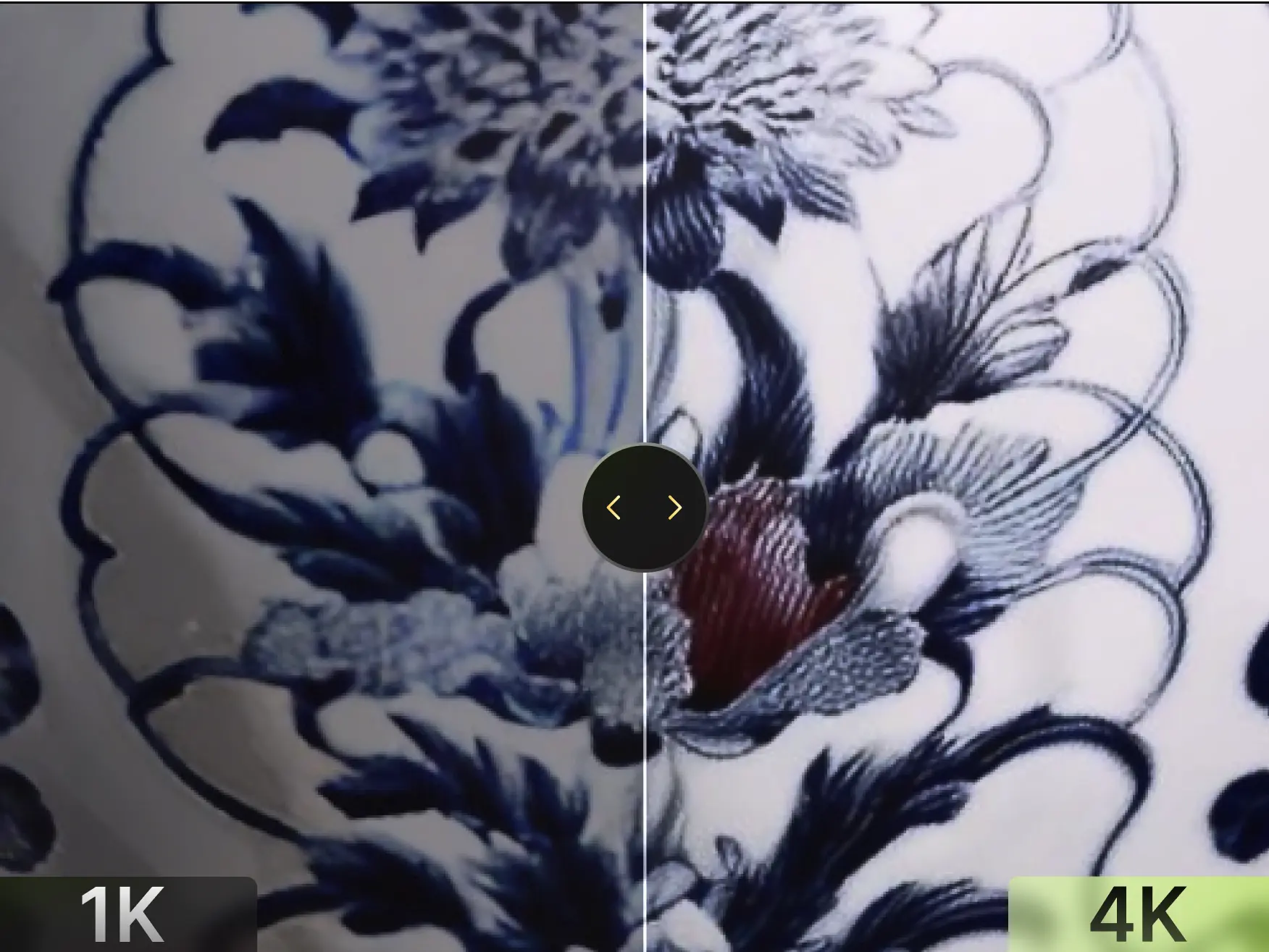
PBR textures built for production

PBR textures built for production

Experience superior de-lit texture processing that separates lighting from albedo map. Enjoy pure, high-fidelity textures with preserved color accuracy that brings your 3D assets to life in any environment.

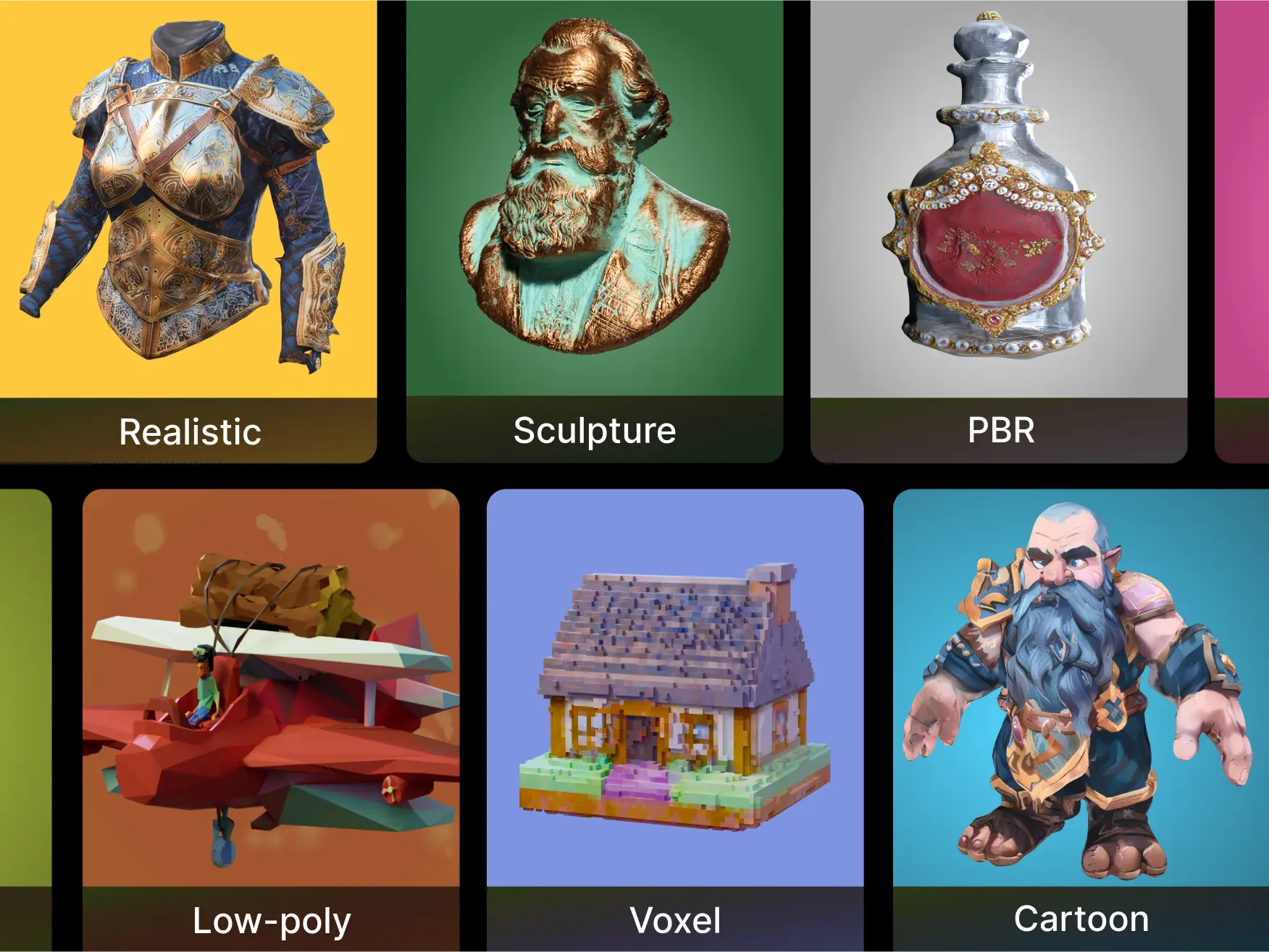
Wide range of styles

Convert everything from photorealistic characters to stylized props without quality loss. Our versatile tool handles diverse artistic styles, preserving the unique aesthetic of each 3D model regardless of design approach.

Wide range of styles

Who Uses Meshy to Convert to PLY?

PLY stores dense scan data, vertex colours, and normals. These are the fields that rely on WEBP scans arriving in it.

3D Scanning and Point Clouds

Export dense scan meshes with vertex colours and normals into the format scanning tools and viewers expect.

Computer Vision Research

Feed a compact, well-documented mesh format into reconstruction and segmentation experiments.

Cultural Heritage Digitisation

Archive scanned artefacts as PLY so colour and surface detail survive independently of any proprietary tool.

Medical and Surveying Visualisation

Move measured surfaces into visualisation packages that read per-vertex colour and normals.

Why Choose Meshy for Converting Images to 3D?

Turning an image into 3D usually means hours of manual modeling, a flat 2.5D heightmap, or a photogrammetry rig with dozens of overlapping shots. Meshy's AI builds true geometry from a single image — with volume, texture and editable output in minutes.

Comparison: manual 3D modeling, 2.5D relief converters, photogrammetry apps, and Meshy's AI image to 3D converter.
Manual Modeling
2.5D Relief Tools
Photogrammetry Apps
Meshy
Full 3D model from one image
No
No
No
Yes
No modeling skills needed
No
Yes
No
Yes
Ready in minutes
Hours–days
Yes
Hours–days
Yes
Edit before exporting
Yes
No
Yes
Yes
No software to install
No
Yes
No
Yes
Free to start
Yes
Yes
No
Yes

Columns describe typical tools in each category (e.g. Blender for manual modeling, lithophane-style converters for 2.5D relief, multi-photo apps for photogrammetry); exact capabilities vary by product.

How Meshy Converts WEBP to PLY

Every image source runs the same reconstruction pipeline: analyse the picture, rebuild a mesh, clean it up, then export.

01

Analyse the image

Meshy reads your WEBP upload and estimates silhouette, depth cues, and surface detail for the reconstruction.

02

Reconstruct the mesh

A single image is rebuilt into a textured triangle mesh in the cloud rather than converted by a local file parser.

03

Clean up and normalise

Topology is simplified, normals are recomputed, and the model is scaled to suit the PLY target.

04

Export to PLY

The finished model is written as PLY with PLYExporter, ready to download.

How to Convert WEBP to PLY

Upload a(an) WEBP File

Frequently Asked Questions

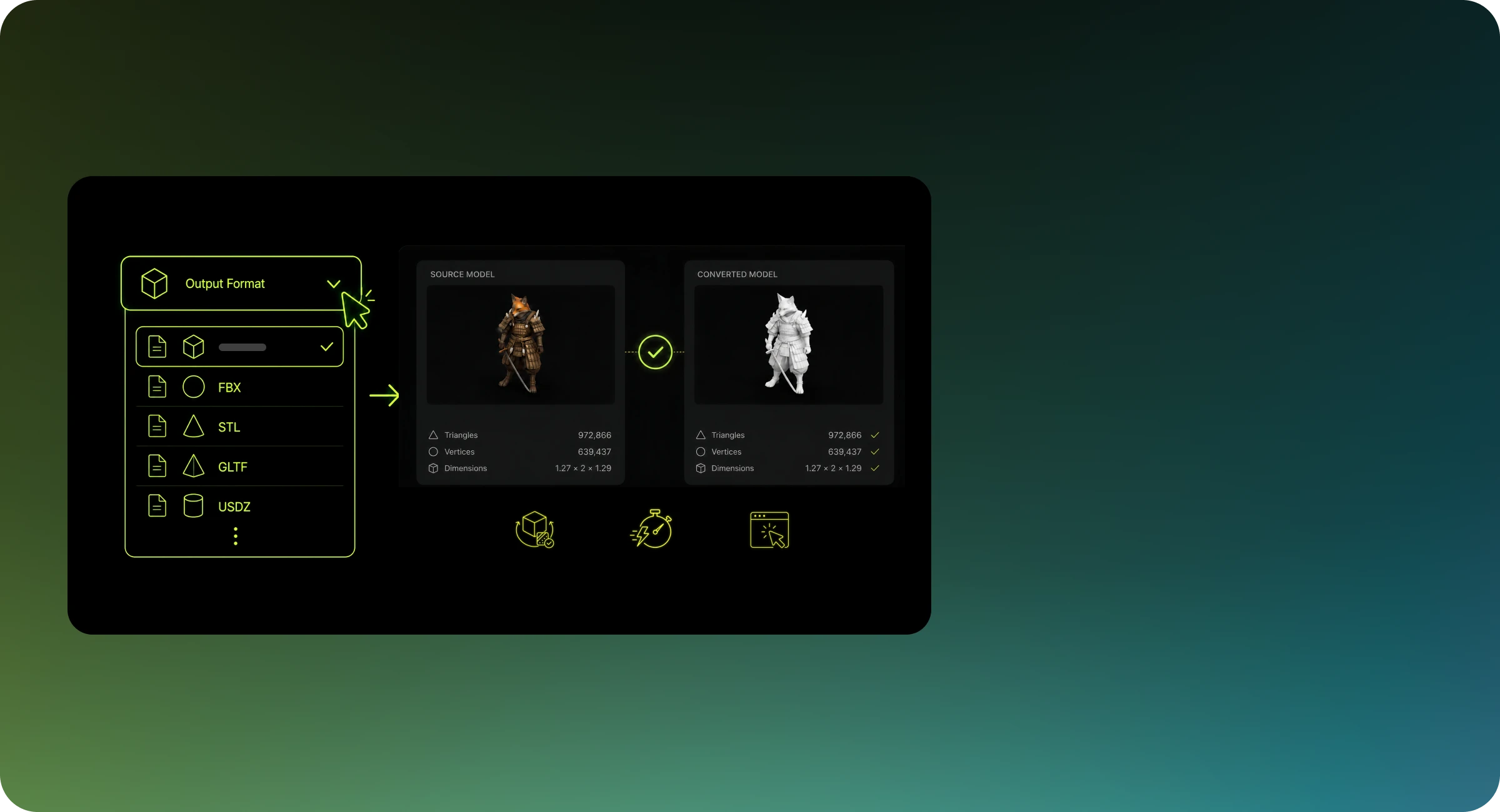
Meshy's WEBP to PLY converter is built for 3D workflows. It runs entirely in your browser — no installs, no signups required — and preserves geometry, materials, and mesh structure during conversion. Whether you're preparing game assets, 3D printing, or 3D Animation, Meshy handles the format handoff cleanly, so you can stay focused on creating. Not sure which format fits your use case? Check out our 3D file format guide.

Free users can convert one file at a time. Pro users can process multiple files in a single session with faster turnaround. If you need batch conversion for a larger pipeline, check out Meshy's API for programmatic access.

Yes. Your files are processed locally in your browser and are not sent to or stored on external servers. If you're working with sensitive or proprietary models, see our Privacy Policy for full details.

Most WEBP to PLY conversions complete in under 30 seconds. Conversion time depends on file size and mesh complexity. Very large files or models with high polygon counts may take slightly longer. If processing takes more than a few minutes, try reducing the polygon count before uploading.

Before converting, keep these in mind: Data loss between formats — PLY may not support certain material channels, animation rigs, or metadata present in WEBP. Review our 3D file format guide to understand what each format supports before converting. Watertight geometry for 3D printing — If you plan to use the output for 3D printing, check that your model is manifold (watertight) before uploading. External textures — Textures referenced externally in WEBP files may need to be packed or re-linked after conversion. Meshy automatically transfers embedded textures, but external texture files require manual processing. Scale units — WEBP and PLY sometimes use different default unit systems. Review your model's scale after conversion, especially if importing into a game engine like Unity or Unreal Engine.

Meshy's converter accurately transfers geometry, face normals, UV coordinates, and basic material properties from WEBP to PLY. Format-specific features that have no equivalent in PLY will be approximated or omitted. For production-critical assets, we recommend spot-checking the converted file in your target application before integrating it into a larger pipeline.

After downloading your converted file, verify: 1. Geometry is intact with no missing faces or flipped normals 2. Textures and materials are applied correctly 3. Scale and orientation match your target application or engine 4. The file opens without errors in your target software

Yes. Once converted, you can use your PLY file directly with other Meshy tools — including the AI Texture Generator to apply new surface materials, the 3D Viewer to check your model, and the retopology and remesh features available in the Meshy workspace. The PLY format is compatible with the full Meshy 3D pipeline.

If your conversion fails, try the following steps: 1. Make sure your WEBP file is not corrupted — open it in another application to verify 2. Check that the file is within the 20 MB size limit 3. Remove any non-standard or proprietary data before re-uploading

Start Converting Your 3D Files Now

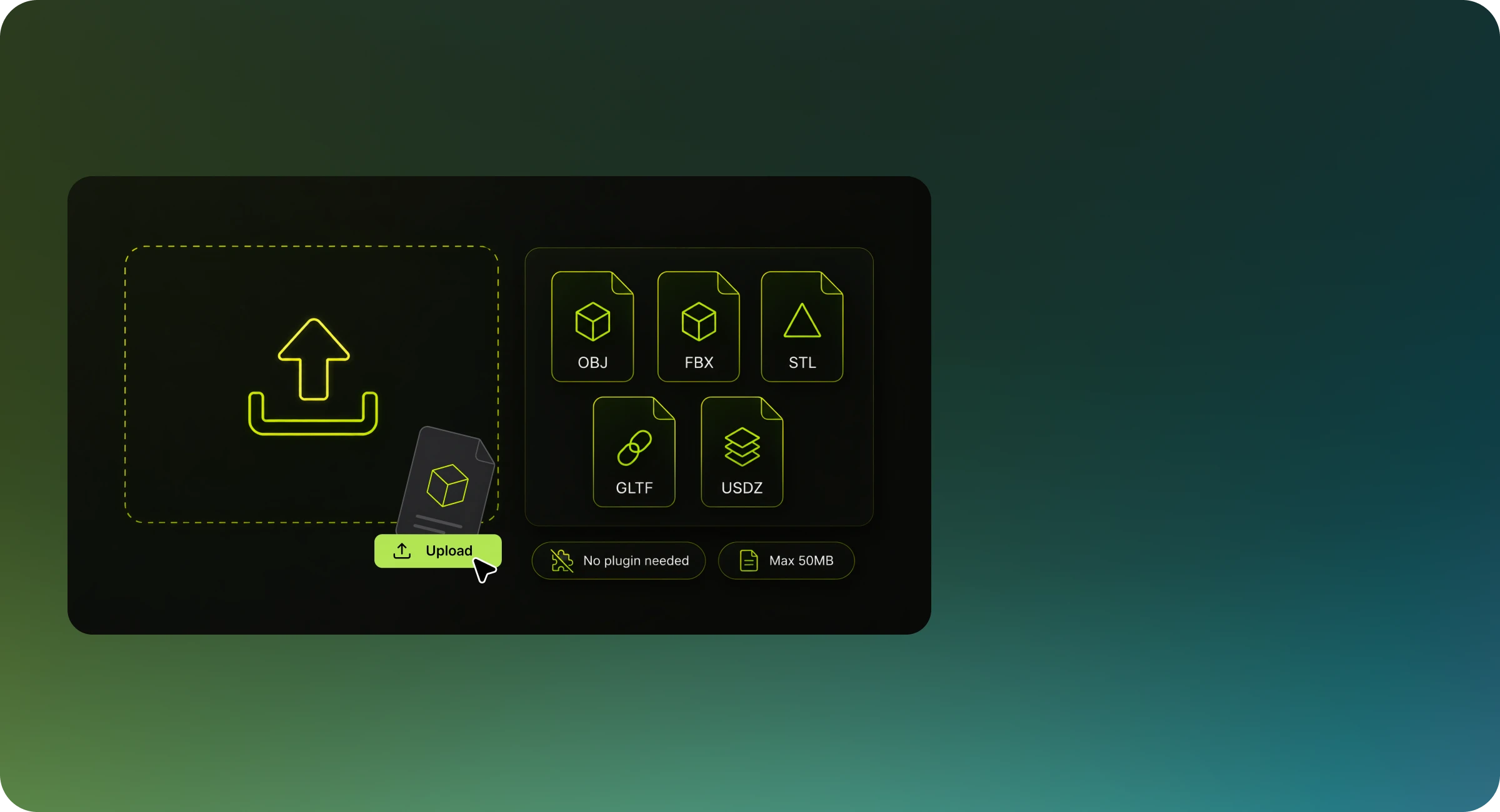
Fast, free, and secure — convert between OBJ, FBX, STL, GLB, and more right in your browser.