Empowering the Next Generation of Makers in STEM
Eric York is a high school educator dedicated to providing students with real-world skills in technology and design. He teaches a demanding technical curriculum that includes Robotics, AP Computer Science Principles, AP Physics, and Video Game Design at Tulare Union High School. His teaching philosophy is centered on hands-on learning, focusing on the engineering design process, and building technical skills that students can immediately apply.
Eric sees 3D modeling as a core element that unifies all of his courses. These tools are natural extensions of the building, testing, and iterating that define his robotics program. More importantly, they enable students across all subjects—from designing robot components to creating game assets in Unity—to take an idea from imagination to digital design to a physical prototype or virtual asset. This ability to create tangible objects significantly boosts student engagement.
However, ensuring every student can achieve this high level of creative output presents significant challenges. The technical demands of traditional 3D modeling were beginning to constrain the very hands-on creativity he championed.
The Challenge: Overcoming Creative Roadblocks
Traditional 3D modeling tools presented steep learning curves that slowed down even the most enthusiastic learners. Designing even simple items often consumed hours, and creating more complex parts could stretch into days. This left less time for actual engineering, programming, or creative iteration.
Furthermore, many students found themselves limited by their existing modeling knowledge. Advanced techniques were out of reach for beginners, making it difficult to realize ambitious projects or add personalized, decorative touches.
The reliance on established tools like Tinkercad and Unity meant that only the most experienced could contribute fully to the design process, while others felt left behind. As a result, the classroom's collective creativity was often constrained—not by lack of ideas, but by the time and effort required to turn those ideas into reality.
"I wanted students to spend less time struggling with modeling tools and more time applying engineering principles, problem-solving, coding, and creativity."
Eric York
Teacher

Why Meshy: A Catalyst for Creativity
Eric York initially discovered Meshy while searching for a faster way to create 3D printable assets from an image. After a quick search, he found that Meshy was exactly the tool he needed.
Once he experienced Meshy's accuracy and utility, he immediately saw its potential to bridge the physical and digital worlds for his students, enabling faster prototyping in both robotics and Unity.
"Uploading an image or entering a prompt to generate a 3D model takes only a few minutes. Even my students who struggle with traditional CAD tools could use this with minimal instruction."
Eric York
Teacher
Meshy acts as a powerful addition to the existing prototyping toolkit. By removing the time-consuming initial modeling step, Meshy allows students to focus on innovation and apply their engineering and coding knowledge.
A Simplified Workflow: Idea to Prototype in Minutes
Meshy's primary impact is drastically reducing the time from idea to physical or digital prototype. Eric has integrated Meshy into a natural, multi-step process that places AI at the beginning of the design cycle.
This is the typical workflow for both his robotics and game design students:
1. Generate a Starting Model
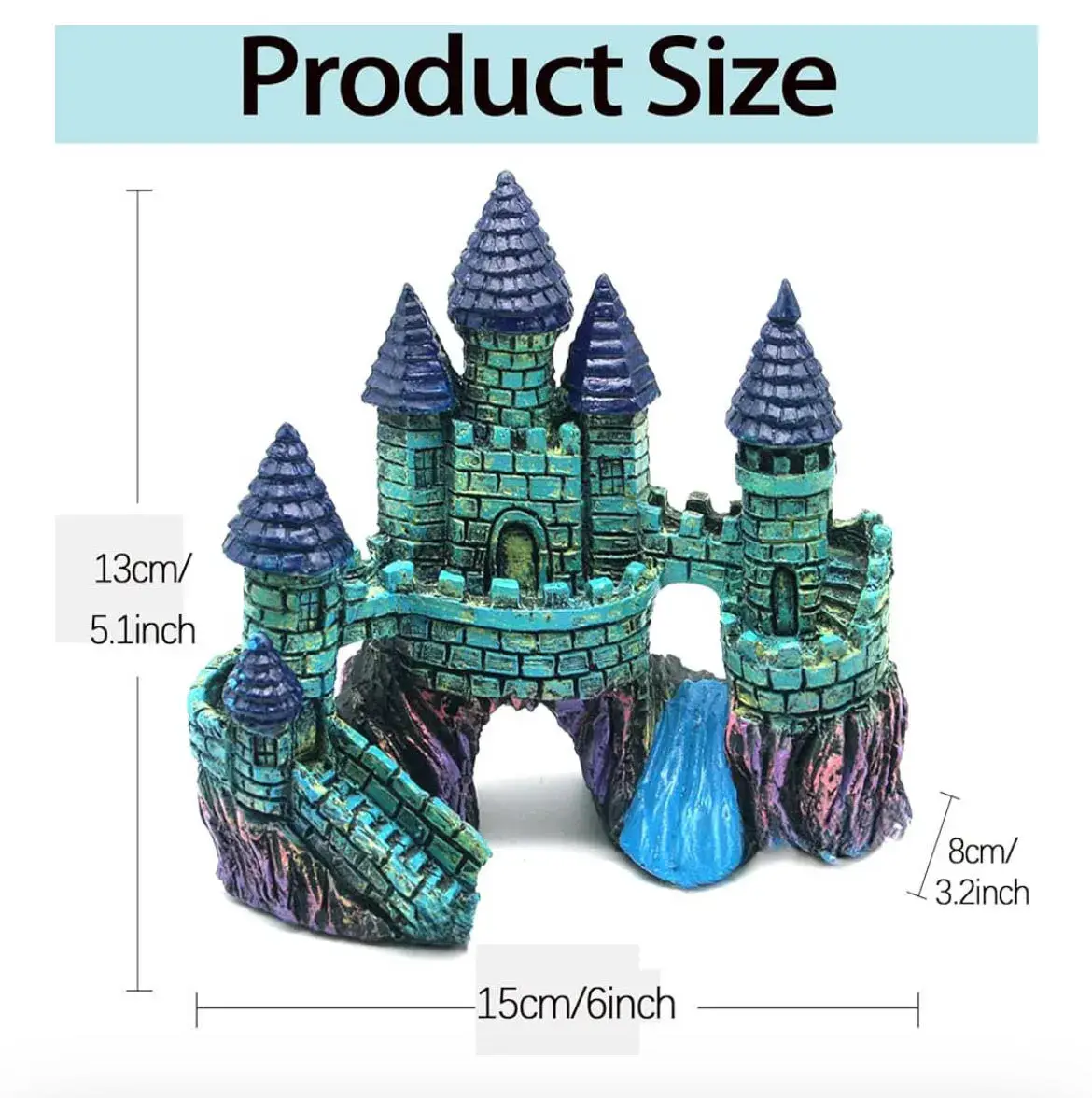
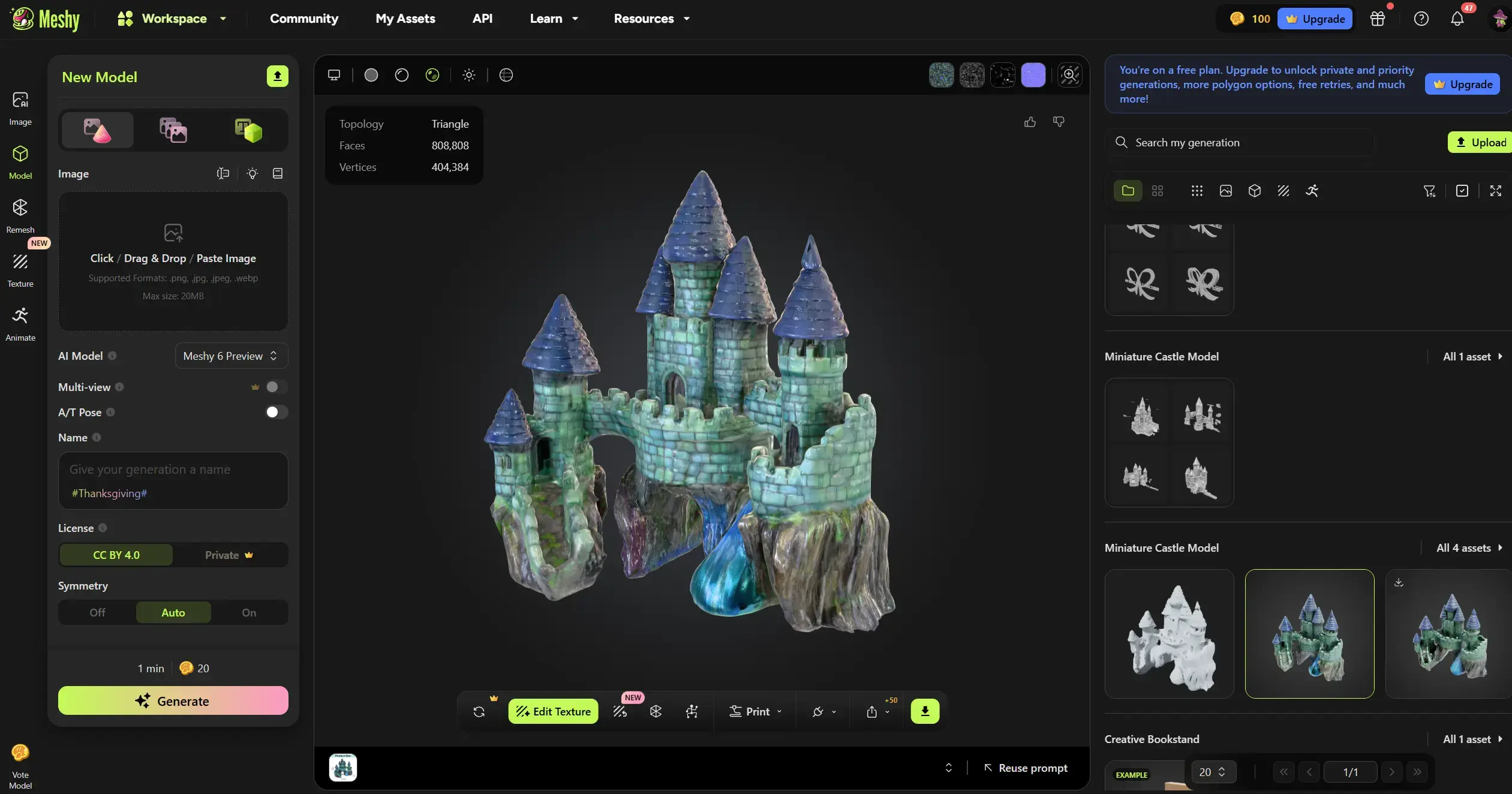 The process starts at the moment of ideation. Students use Meshy to quickly generate a base 3D model. This can be achieved either by entering a text prompt or by uploading a reference image. For his own project, York successfully generated a model for a castle by uploading a photo.
2. Refine in CAD Software The resulting Meshy model is then imported into existing computer-aided design (CAD) tools for refinement. Students refine it in Tinkercad, Blender, or other CAD software. This crucial step allows students to modify the base model to meet precise functional or aesthetic requirements.
3. Final Production and Integration
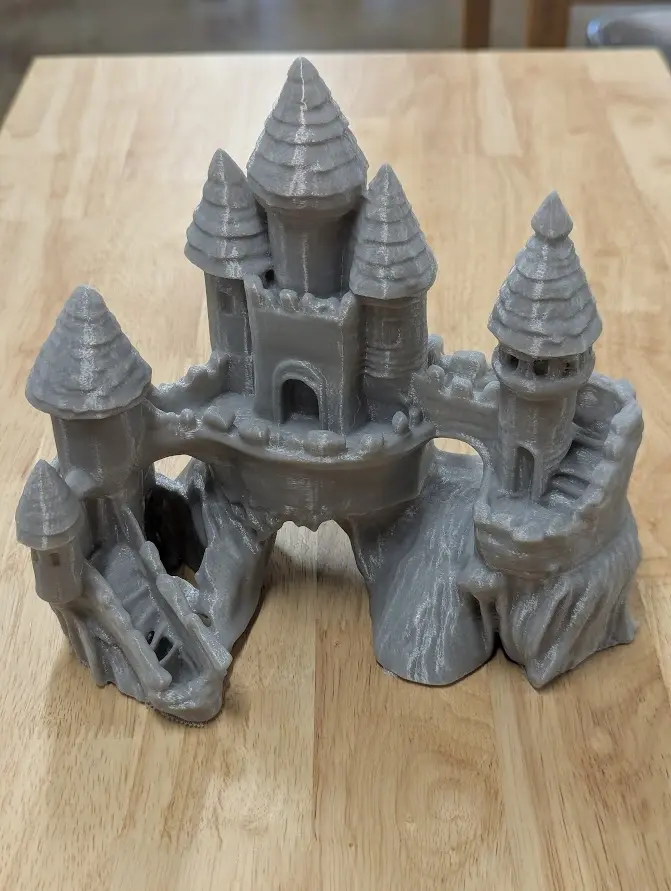 The fully refined model is then deployed to its final medium. For physical projects, such as customized robotic components, the model is 3D printed. For game development, the model is imported into Unity.
"Meshy drastically reduced the time from idea to physical or digital prototype. Instead of spending hours modeling a decorative or complex part, students can generate something instantly and then refine it."
Eric York
Teacher
Tangible Results: Amplified Learning and Scope
By incorporating Meshy, Eric York anticipates and has already begun to see a significant impact on his students' work and motivation.
- Focus on Iteration and Engineering: In robotics, students can generate a starting point and focus on iteration, engineering, and integration of the components, instead of spending days on manual modeling. This is expected to lead to a faster turnaround and more creative problem-solving.
- Larger Project Scope: Students are no longer limited by their modeling abilities, enabling them to pursue larger project scopes and more ambitious ideas. Game design students can now fill their worlds with assets they personally created with AI.
- Empowered Beginners: Meshy makes full projects achievable even for beginners, keeping them motivated because they see results quickly.
Looking Ahead: Meshy as the Next Calculator
Eric York sees Meshy's potential role in his teaching as a catalyst. He believes that AI tools like Meshy will become standard in classrooms because they help bring ideas to life and let students focus on innovation rather than technical limitations.
He drew a compelling parallel to past educational technology:
"Just like the calculator expanded what students were able to do in math, Meshy will expand what students can create and prototype."
Eric York
Teacher
He expects students to take bigger risks, attempt more ambitious projects, and ultimately feel empowered to create things they didn't think were possible.
Conclusion: Move from Imagination to Creation
Eric York's experience shows that Meshy AI is more than a novelty; it is a fundamental shift in the creative design workflow. By eliminating the steep initial barrier of 3D modeling, Meshy accelerates the core learning process in robotics and game design, allowing students to focus on the full design cycle: ideation, prototyping, iteration, and final production. It empowers students to see themselves as makers and think bigger.