Vincent Chapeta, an educator specializing in hands-on STEAM, robotics, and physical science, is dedicated to expanding creative and technological opportunities for students at Katherine Edwards Middle School STEAM and Dual Immersion Academy. His classes emphasize creating, experimenting, and iterating through projects that blend traditional education with emerging technology like 3D modeling.
Empowering Student Creativity Through 3D Art
In line with the school's strong cultural emphasis, one of the most important annual projects is creating Alebrijes—colorful, fantastical creatures central to the Día de los Muertos celebration.
Students are challenged to design their own Alebrijes, 3D model it, print it, and finally display it on the school's altar. This project is designed to help students internalize the creative aspects of Latino culture and create a proud, tangible artifact.
The Steep Learning Curve: Traditional 3D Modeling Challenges
Before incorporating Meshy AI, the process of turning a student's imaginative concept into a printable 3D model was plagued by challenges in a middle school setting.
The key obstacles included:
- Time Commitment: The project required carving out two full weeks just to teach students the basics of 3D modeling on their iPads using CAD programs.
- Technical Accessibility: Hardware challenges, such as unexpected incompatibility issues when iPads updated, sometimes rendered purchased Apple Pencils unusable, forcing students to rely on trackpads—a difficult method for detailed modeling.
- Low Engagement and Frustration: The complexity of traditional 3D modeling often led to student anxiety and shame. Students who lacked technical skill often created very basic models or failed to finish their designs, making them reluctant to share their work.
Finding the Solution in Meshy
To overcome these challenges and democratize the creation process, Vincent began searching for an AI tool that could enable his students to create 3D models without needing to learn a complex CAD program. He found that Meshy was the right fit because the Alebrije models don't have to be super specific, they just need to create a general model from a prompt they wrote.
Integrating Meshy instantly solved the most pressing issues: time-consuming instruction and the accessibility barrier caused by the lack of 3D modeling skills.
"Having Meshy has honestly solved all of these issues, and I have been seeing my kids much more excited to create their build or to refine their prompt so they get models to fit what they envision."
Vincent Chapeta
Teacher

Accelerating the Creative Workflow With Meshy
Meshy AI simplified the journey from cultural storytelling to physical artifact, allowing students to focus on their creative vision and cultural narrative rather than topology and technical details.
The workflow is as follows:
1. Creative Prompting: Students write the backstory for their Alebrijes. They then input the text description into Meshy, allowing the AI to generate a preliminary model of their creature. Some students also used reference images from the internet to guide their model creation.
2. Prompt Refinement: Students learn the critical skill of prompt engineering by adjusting their text input to receive models that accurately reflect their imagination.
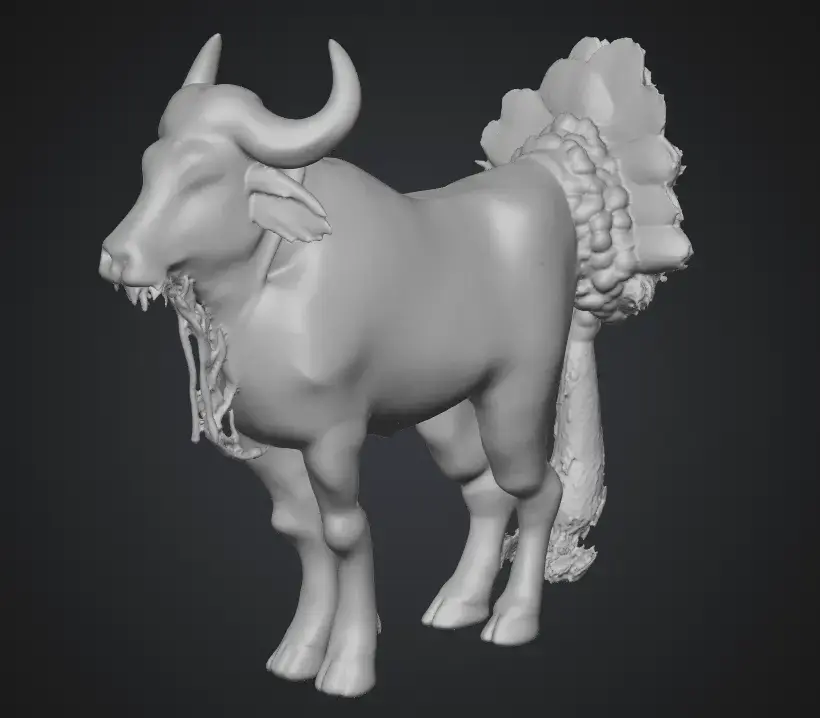
3. 3D Printing Preparation: Vincent handles technical conversion, turning the Meshy file into G-code and managing the older 3D printers, which only accept SD cards.
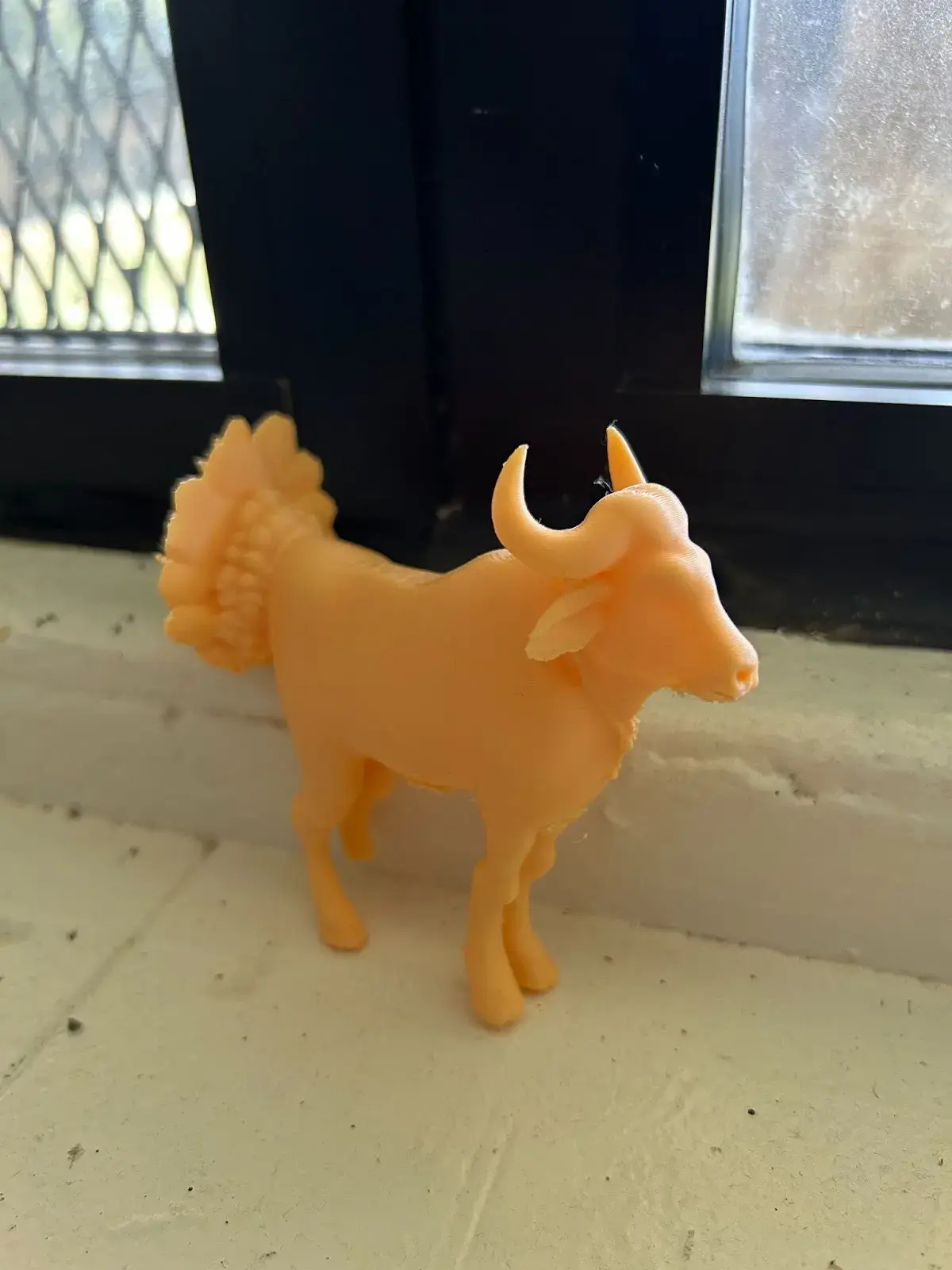
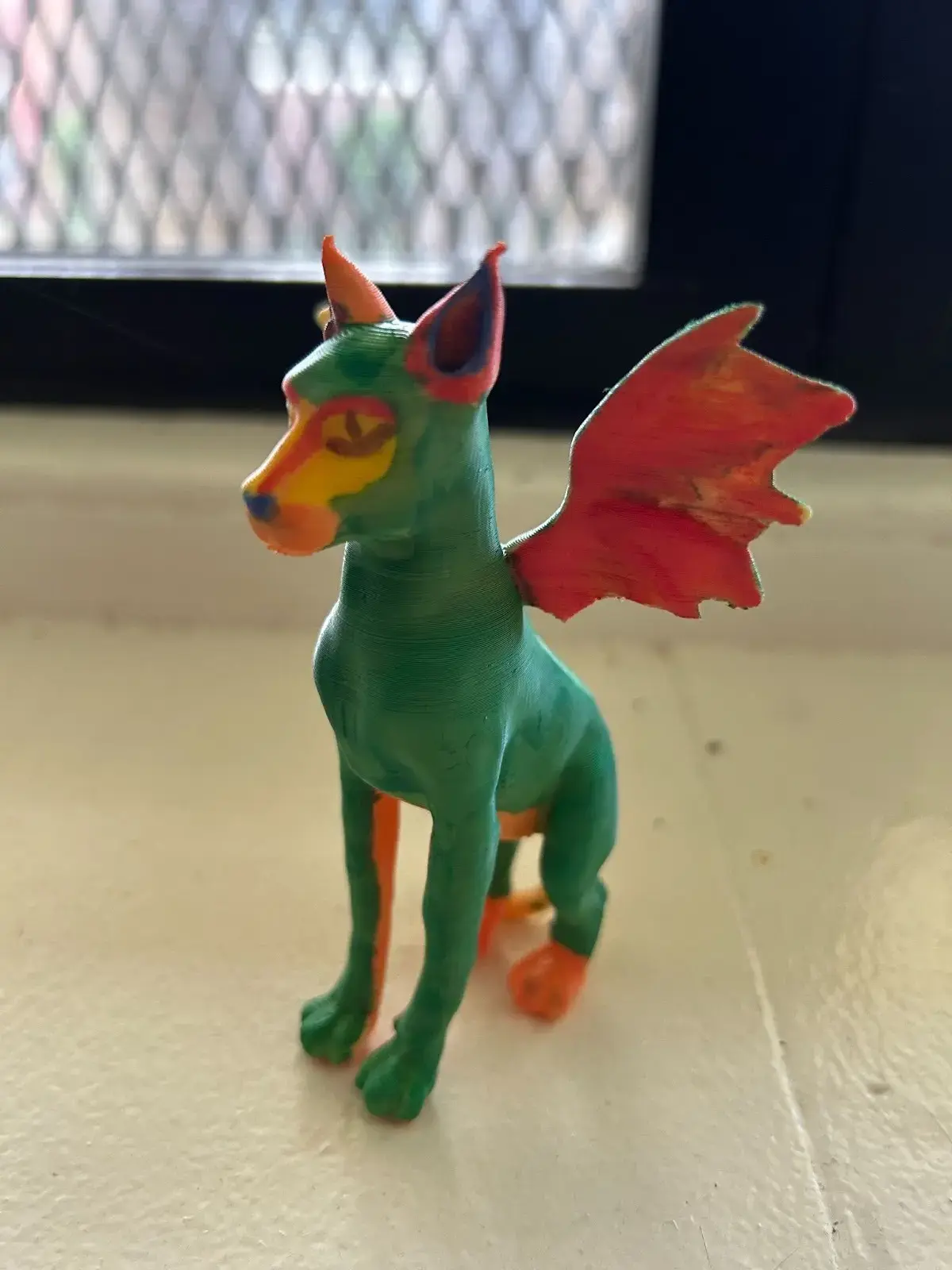
4. Tangible Art Creation: Once printed, students take ownership of their models, painting them with acrylic markers to give them the vibrant aesthetic of traditional Alebrijes.
Unlocking Creativity and Cultural Pride
With Meshy, the outcome of this simplified workflow has been transformative, shifting the classroom atmosphere from dread to excitement. Students who previously struggled or were unmotivated are now eager to participate and refine their models.
One student noted, "I am so glad that we can use this AI. I don’t think I could have made anything even close to this if we had to do it ourselves."
Crucially, Meshy's ability to unlock creativity also served a deeper purpose, reinforcing students' cultural identity and pride. By bridging the gap between imaginative ideas and tangible creation, Meshy empowers every student to engage in this artistic practice, creating an artifact they can be proud to show to their community.
"I do think that it will help them feel pride as they see their creations on the altar during Dia de los Muertos, since they would be engaging in the artistic practice that people from Mexico have engaged in for decades."
Vincent Chapeta
Teacher
For Vincent, the switch to Meshy meant more time supporting creative growth and deep learning. The impact went beyond individual projects. Meshy opened the door to new types of cross-cultural activities, entrepreneurship explorations, and enhanced engineering builds. Alebrije models became centerpiece displays at Dia de los Muertos events, inspiring both students and the broader community.
Looking Ahead: Expanding Creative Boundaries With Meshy
Vincent Chapeta’s classroom demonstrates that AI tools like Meshy are not replacements for human skill, but powerful accelerators for creativity and accessibility. By removing the steep technical barriers of traditional 3D modeling, Meshy allows every student—regardless of prior skill—to participate in a meaningful cultural project and feel pride in their work.
"I hope it inspires them to look for and experiment with AI in a way that helps them be creative or express ideas they wouldn't otherwise, because they lack a certain skill or expertise in specific hardware/software."
Vincent Chapeta
Teacher
Looking forward, Vincent plans to expand the use of Meshy AI to create 3D printed designs for their Lunar New Year automata project and, most significantly, to help students enhance their robotics and engineering builds for competition.