A Historic Academy Embraces the Digital Age
The Hungarian University of Fine Arts (HUFA), founded in 1871, is one of Central Europe's oldest and most prestigious art academies, with a history spanning over 150 years. Deeply rooted in the classical disciplines of fine art, such as painting and sculpture, HUFA has recently begun an exciting transformation by integrating digital and technological innovation into its academic foundation. A key driver of this shift is the Digital Art Center, an interdisciplinary hub led by Digital Arts teacher Richárd Masa. The Center's mission is to bridge the gap between traditional art education and the latest technological developments, exploring tools like artificial intelligence, 3D printing, and motion capture.
Why Meshy: The Need for Acceleration and Connection
HUFA actively supports creative experimentation with emerging technologies, including AI and 3D generation. However, the core challenge was finding tools that could fluidly connect the heritage of fine art with the possibilities of new technology.
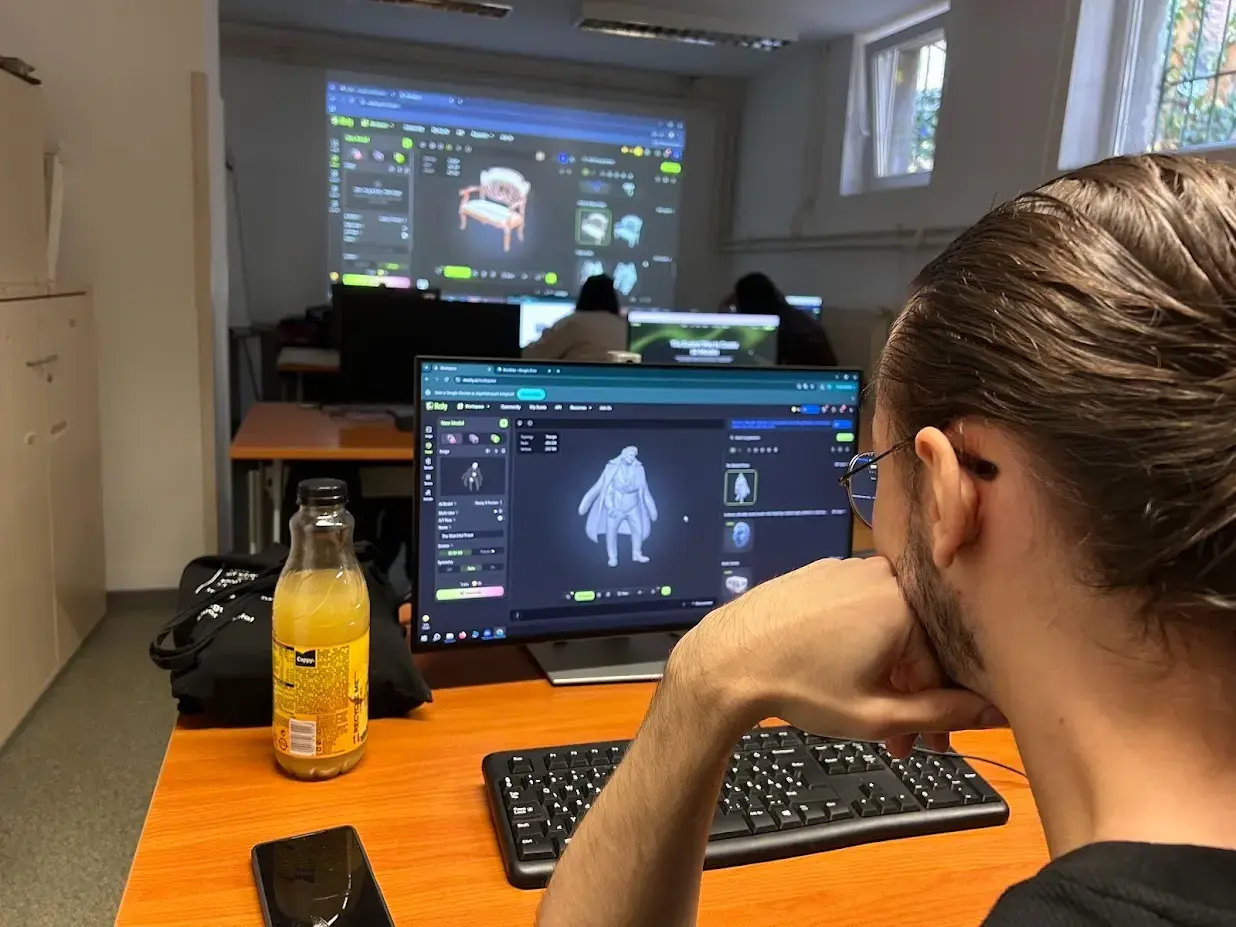
The decision to integrate Meshy directly addressed this need. HUFA saw Meshy's potential to accelerate 3D asset creation and enrich visual experimentation across departments. By adopting Meshy, the university offered a practical means to give students access to technologies shaping the future of visual production while simultaneously keeping artistic expression central to the learning experience.
Meshy Integration: Workflows Across HUFA's Departments
At HUFA, Meshy is integrated into the creative workflows of several departments, with each program using the technology to explore different artistic perspectives. This integration serves HUFA's broader mission to bridge traditional fine art with digital innovation.
Visual Design and Character Concept Art Workflow
In both the Visual Design Department and the Character Concept Art Course Series, a similar process is followed.
1. 2D Ideation
Students start with basic concept sketches. These concepts are first developed using free AI image generators.
2. Refinement
The strongest visual elements are composited in Photoshop.
3. 3D Generation
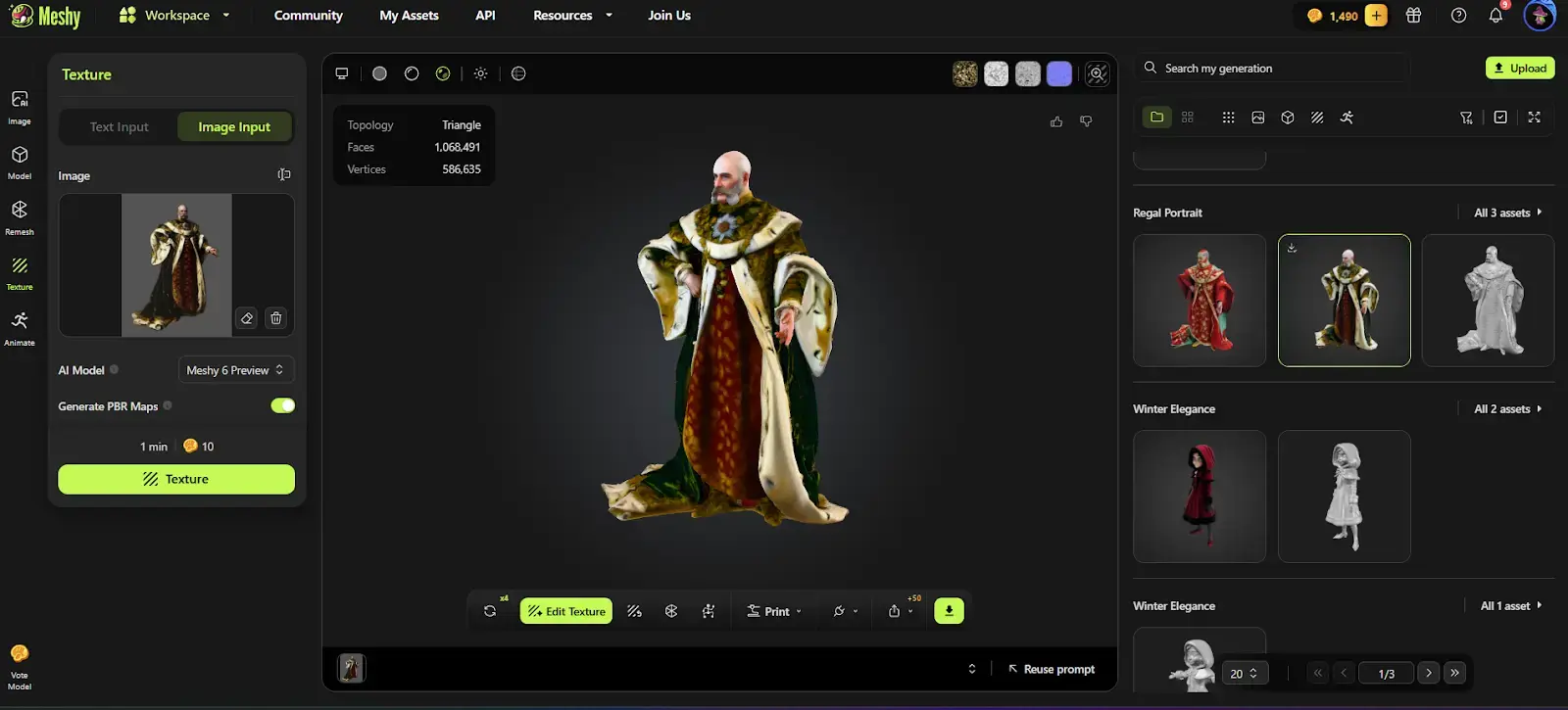
Selected 2D renders are processed in Meshy's image-to-3D generator.
 4. Finalization and Integration
The resulting 3D character models are refined through overpainting and detailing. Finally, they are integrated into Unreal Engine environments created for the same projects.
4. Finalization and Integration
The resulting 3D character models are refined through overpainting and detailing. Finally, they are integrated into Unreal Engine environments created for the same projects.
Painting Department Workflow
In the Painting Department, Meshy is employed to enhance traditional practice by generating precise, atmospheric reference material.
1. 3D Asset Creation
Students recreate historical interiors and props, often based on old photographs. They model furniture and objects using traditional 3D software like Maya, Blender, or 3ds Max.
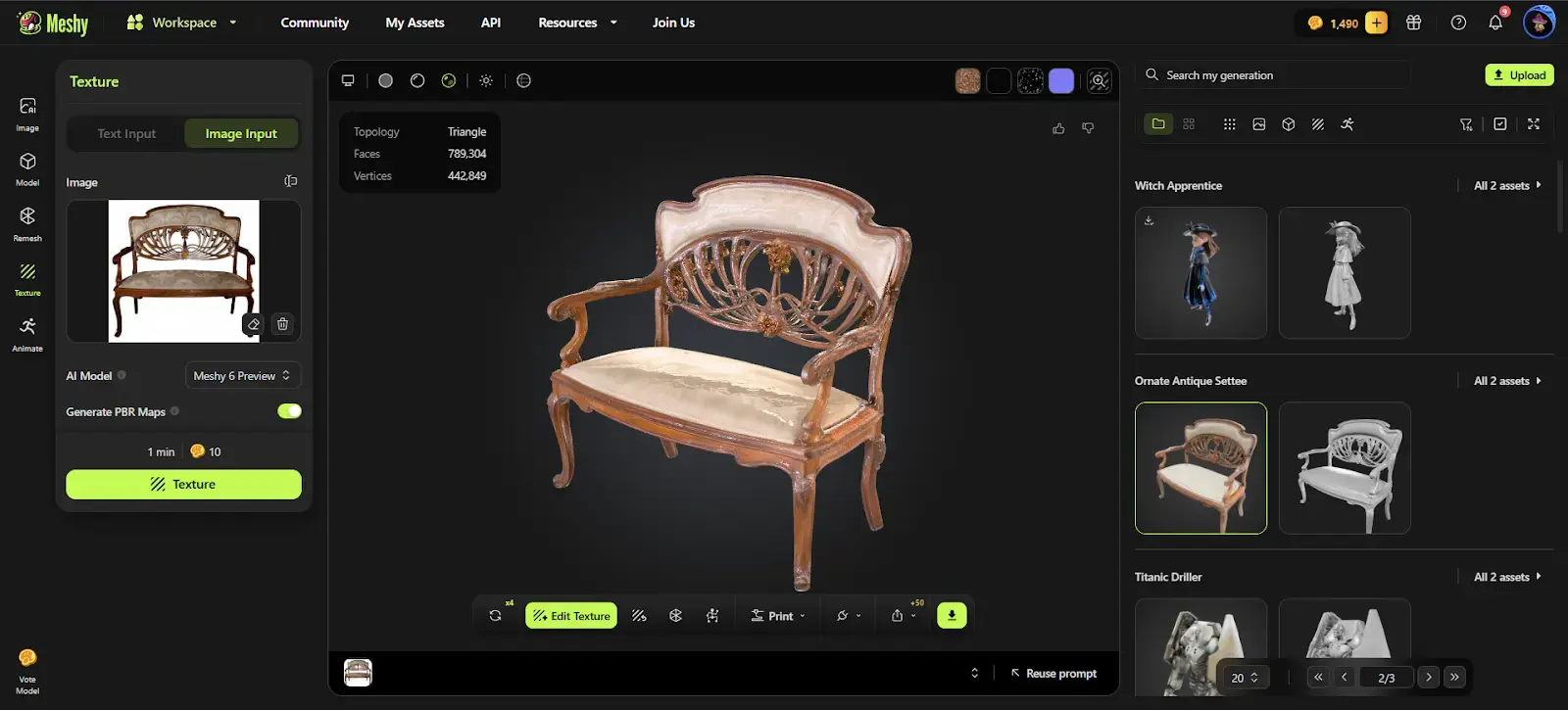 2. Scene Assembly & Lighting
Meshy is then used to assemble these 3D scenes.
3. Reference Rendering
The scenes are lit and rendered. This process provides accurate and atmospheric reference images for traditional figurative and still-life painting exercises.
2. Scene Assembly & Lighting
Meshy is then used to assemble these 3D scenes.
3. Reference Rendering
The scenes are lit and rendered. This process provides accurate and atmospheric reference images for traditional figurative and still-life painting exercises.
Significant Impact: Efficiency, Creativity, and Collaboration
Meshy is integrated into traditional fine art practices rather than being treated purely as a technical tool. This approach has yielded powerful results across the university:
- Enhanced Efficiency and Freedom
The main improvement is time efficiency — what once took days can now be achieved in hours — freeing students to focus on composition, style, and creative experimentation rather than technical barriers. The tool has expanded students' ability to visualize and construct complex forms, bridging 2D and 3D thinking. Students are enthusiastic about the technology, appreciate the speed and creative freedom it introduces to the process. They are becoming more experimental and open-minded, seeing digital tools as extensions of artistic thinking, encouraging them to iterate more, take creative risks, and test ideas faster.
- Unique Cross-Departmental Collaboration
The shared digital workflows have fostered a new form of cross-disciplinary collaboration. Projects often involve inter-departmental teamwork, where visual design students create assets, painting students use 3D scenes as reference, and animation students bring these digital assets to life. This shared ecosystem fosters an open, research-driven environment where learning happens through collective discovery.
Expanding the Digital Art Frontier
Looking ahead, HUFA plans to continue Meshy integration, with an eye toward expanding its use into external productions and an upcoming in-house animated film project developed at the Digital Art Center. HUFA anticipates Meshy will become a standard educational and experimental tool across additional departments in the near future, further cementing the connection between fine art heritage and technological possibility.