Pioneering Modern Game Art Education
Abdullah Raşid Gün is at the forefront of digital art and 3D modeling education in Istanbul, leveraging emerging technologies to reshape how students and researchers engage with creative tools.
As a research assistant and lecturer in the Digital Game Design Program at Istanbul Topkapı University and a graduate researcher at Istanbul Technical University, Abdullah focuses on bridging the gap between advanced digital workflows and accessible, meaningful creation.
For Abdullah, the goal of teaching and research goes beyond software proficiency. He is committed to creating an environment where every student—regardless of prior technical skill—can contribute to collaborative game scenes, digital reconstructions, and experimental environments.
Removing Technical Barriers to Creativity
Traditional 3D education often imposes a high technical barrier, resulting in long modeling times for beginners and making it difficult to produce many assets in a short semester. This technical focus means students are often slowed down by technical barriers, especially for students lacking strong sculpting or topology skills.
Gün recognized that these technical obstacles were distracting students from high-level artistic concerns, such as composition and narrative. Addressing these issues was essential for shifting the educational focus to creative problem-solving and visual communication.
Discovering and Embracing Meshy for Rapid Iteration
Gün discovered Meshy while actively researching new AI tools for accelerating 3D workflows and experimenting with alternatives to traditional modeling pipelines.
Meshy immediately appealed to him in both a teaching and research context due to its accessibility, speed, and surprising mesh quality. This combination made it ideal for classroom environments where students need rapid iteration. By leveraging Meshy, Gün could directly address the technical bottlenecks his students faced.
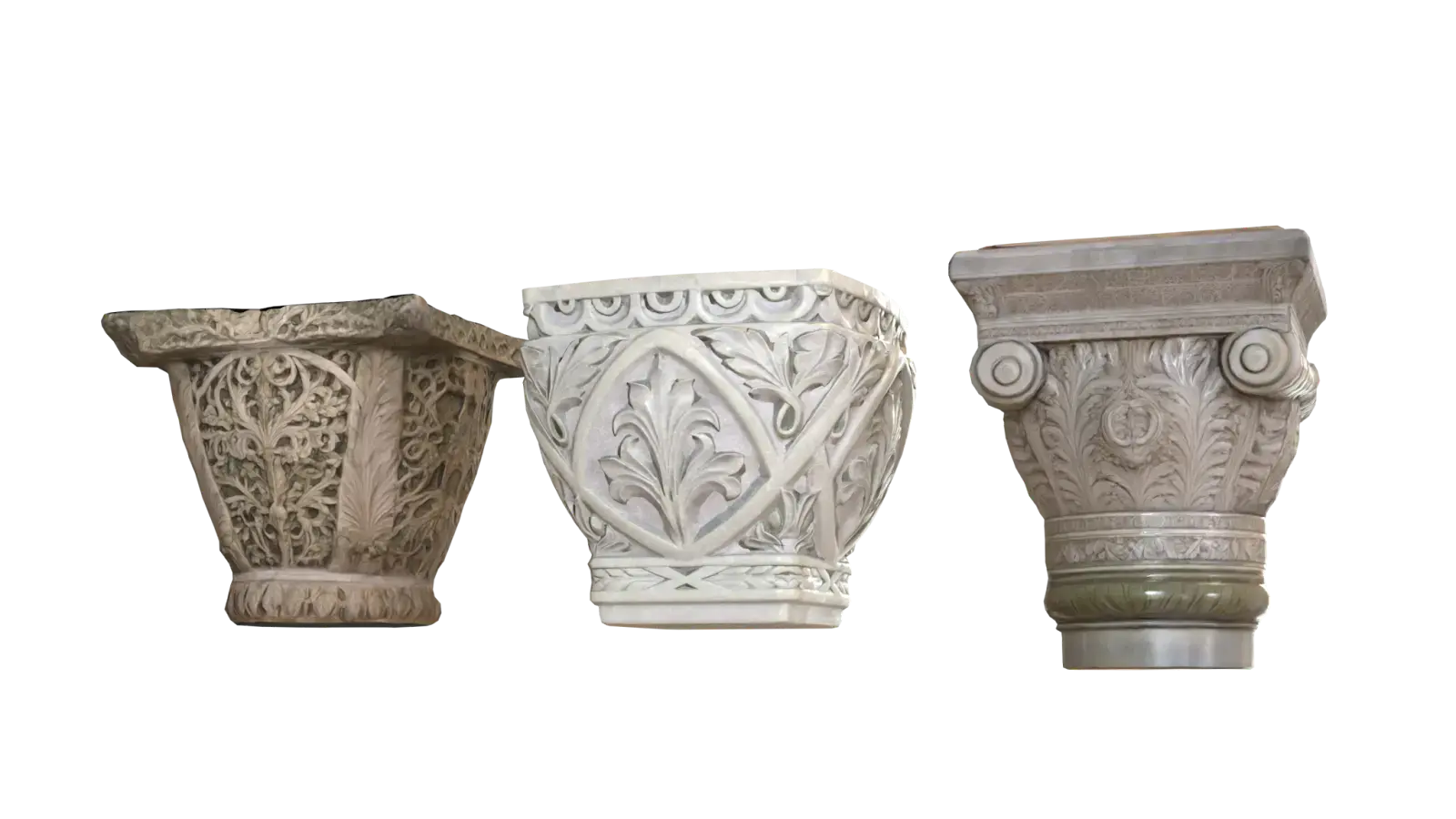
Furthermore, Meshy proved valuable beyond the classroom, as Gün also applies Meshy in his own academic work on digital cultural heritage, specifically focusing on the reconstruction of Byzantine architectural elements. Here, Meshy serves as an efficient way to generate high-poly reference models from images.
By implementing Meshy, Gün highlights the primary educational benefit:
"Meshy significantly lowers the technical barriers that typically slow down students in early 3D education."
Abdullah Raşid Gün
Teacher

He explains that instead of spending weeks on complex modeling, students can jump directly into environment layout, artistic direction, lighting, and storytelling. This dramatic acceleration is particularly critical in his Game Project III course, where the final assignment is demanding and time is constrained.
The Meshy-Enhanced Workflow: Focusing on Creative Direction
Gün is currently integrating Meshy into three courses: Game Project III (Fall semester), Game Art & 3D Modeling (next spring), and Digital Game Production (next spring).
In his Game Project III course, 40 senior students are divided into 10 teams, each tasked with creating a complete, visually cohesive Unity scene using fully AI-generated 3D assets produced with Meshy. The focus is entirely on creative direction, not manual labor.
Meshy is introduced to students through a dual approach:
- Structured Assignments: Students work on focused tasks such as generating specific assets or completing guided composition exercises.
- Open Exploration: Students have full creative freedom to generate any objects or elements needed for their individual project scenes.
The student workflow is structured to prioritize artistic decision-making over technical execution.
1. Generate Assets: Students must generate dozens of Meshy assets for their level.
2. Narrative and Design: They develop a narrative-driven scene and construct and design a full-level environment.
3. Scene Composition: Students use Unity for layout, lighting, and mood.
4. Minimal Refinement: They are restricted to making only minimal adjustments in Blender/Photoshop, forcing them to master the AI pipeline.
This process allows students to spend more time on storytelling, lighting, and scene composition, and complete a polished experience within an academic semester timeframe.
Accelerated Creativity: Democratizing 3D Design in the Classroom
The results of integrating Meshy are immediately apparent in the classroom environment. Gün finds that Meshy dramatically accelerates the transition from concept to prototype by enabling students to generate usable assets within minutes. Most significantly, Meshy democratizes the creative process.
"Students who struggle with traditional modeling techniques can still contribute meaningfully to scene design, visual storytelling, and environmental composition."
Abdullah Raşid Gün
Teacher
Conclusion: The Future of Creative Pipelines is AI-Empowered
Abdullah Raşid Gün's work at Istanbul Topkapı University proves that AI-assisted 3D workflows are not just a technological novelty but a powerful pedagogical tool. By integrating Meshy AI, he has successfully transitioned his students' focus from the mechanics of manual modeling to the core principles of art direction, visual storytelling, and collaborative design.
This approach not only prepares students for modern industry pipelines but also ensures that every student, regardless of technical skill, can contribute to ambitious, visually rich projects.