Bridging Physical Scanning and Digital Creation
Located near Newcastle, Australia, West Edge 3D is a specialist 3D print service bureau catering to a global audience of model railroaders, diorama builders, and architects. They offer high-end full-color 3D printing using their own Stratasys J55 Prime colour polyjet printer, alongside standard resin printing via a FormLabs Form 4 SLA printer.
Their core business has long relied on 3D-scanning real people to create lifelike figurines in various scales. However, maintaining a diverse catalog solely through physical scanning presented logistical challenges. To supplement their scanned library and meet evolving customer needs, West Edge 3D began exploring digital generation tools to expand their offerings beyond what could be captured in their local studio.
Addressing the Need for Greater Diversity
After a couple of years in business, West Edge 3D encountered a practical limitation: they were running out of family and friends to scan. The turning point came when they created sets of scanned locomotive crew figures requested by customers in the USA. Fulfilling these orders made it apparent that to truly serve a global market, they needed to offer a much more diverse range of humans—representing African Americans, Latinos, Southeast Asians, Filipinos, and Pacific Islanders.
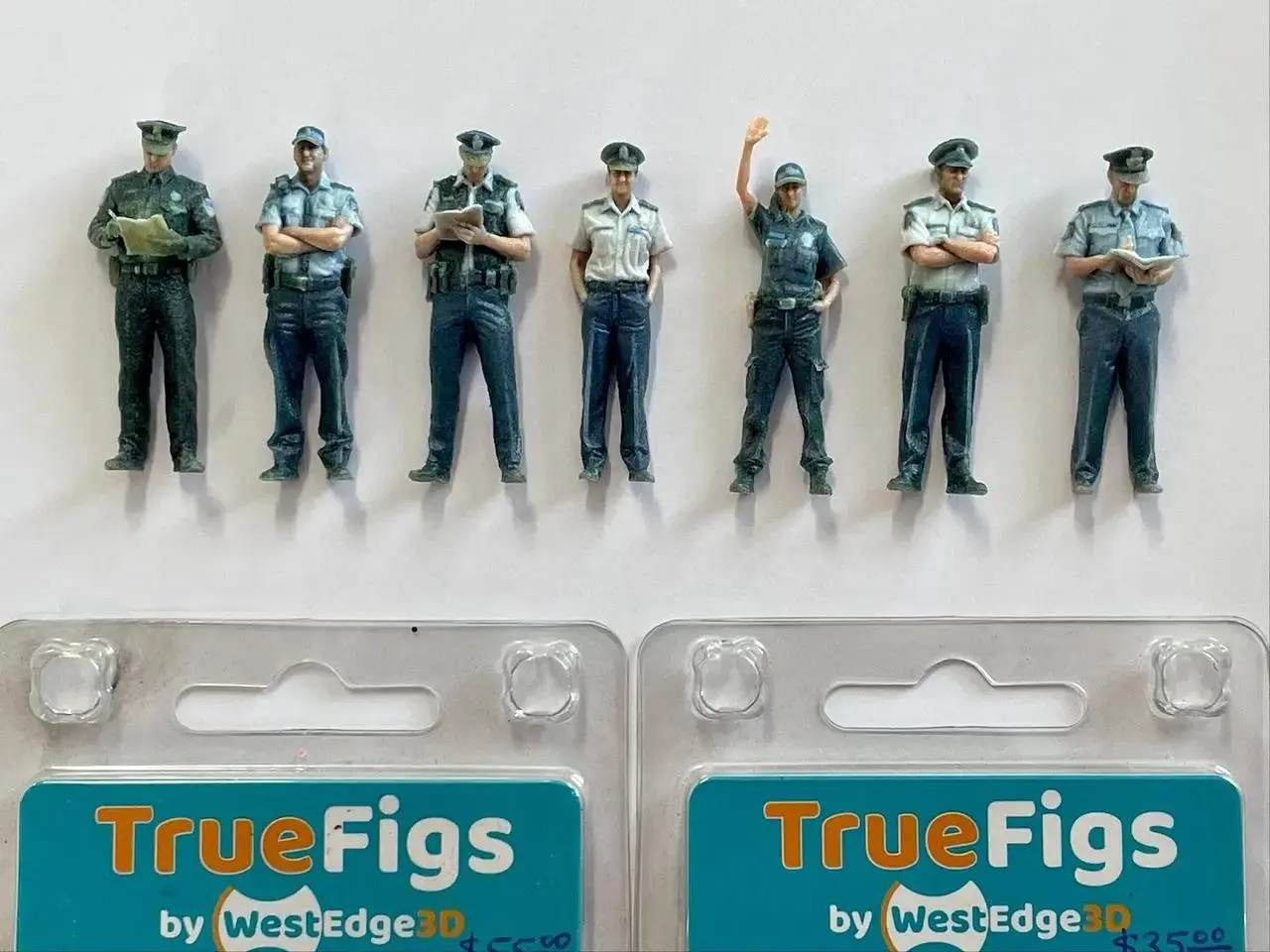
Relying solely on local models in New South Wales made building such a diverse catalog difficult. They needed a way to produce realistic human figures of different races, ages, and historical eras without the logistics of hiring and scanning actors. This is where Meshy proved to be the breakthrough they needed. It offered a powerful alternative, allowing them to generate proportional human figures directly from text prompts using Meshy's Text-to-3D feature,—effectively bypassing the geographical limitations of physical scanning.
Workflow: From Text Prompt to Polyjet Print
West Edge 3D utilizes Meshy primarily to generate assets that would be difficult or impossible to scan locally. Their workflow focuses on leveraging the meshy's ability to create ready-to-print color textures that suit their polyjet printers. The process typically follows these steps:
- Text-Based Generation: Using the latest version (Meshy 6 Preview), the team generates specific figures via text prompts to fill gaps in their catalog.
- Texture Generation: Using Meshy to automatically generate detailed textures, including baked-in shadows and lighting effects on garments. This step is crucial for their full-color printing process, as it reduces the need for manual texture painting.
- Direct Manufacturing: The generated files are sent to the Stratasys J55 Prime printer. The printer uses water-soluble support material, which simply dissolves away after printing, leaving a finished, fully colored part ready for sale.
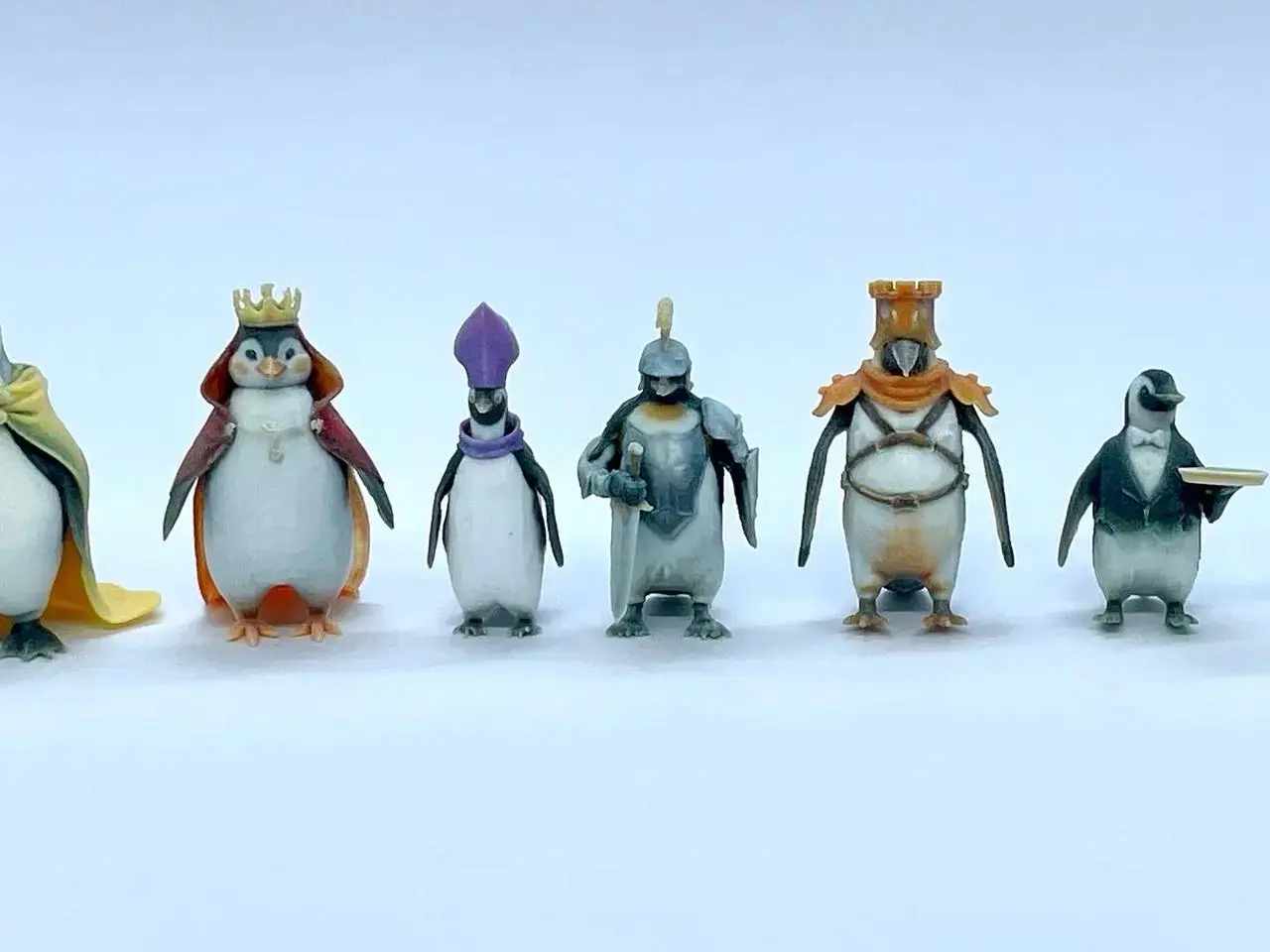
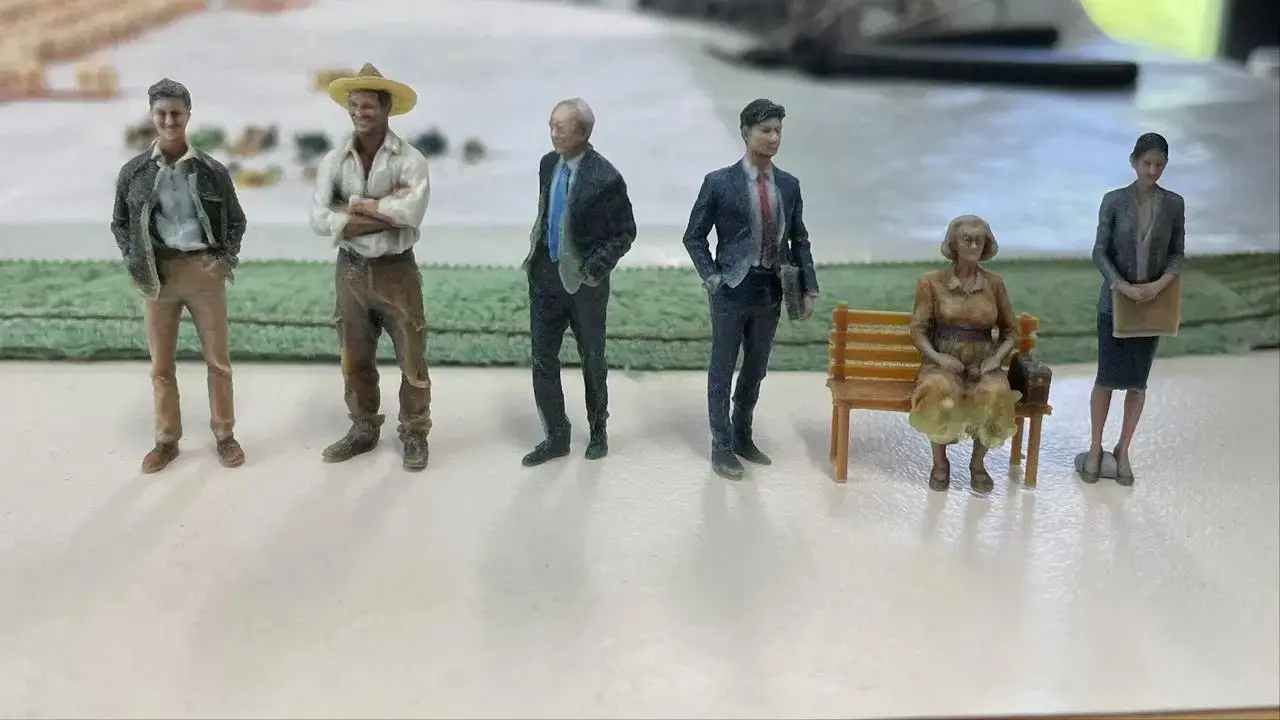
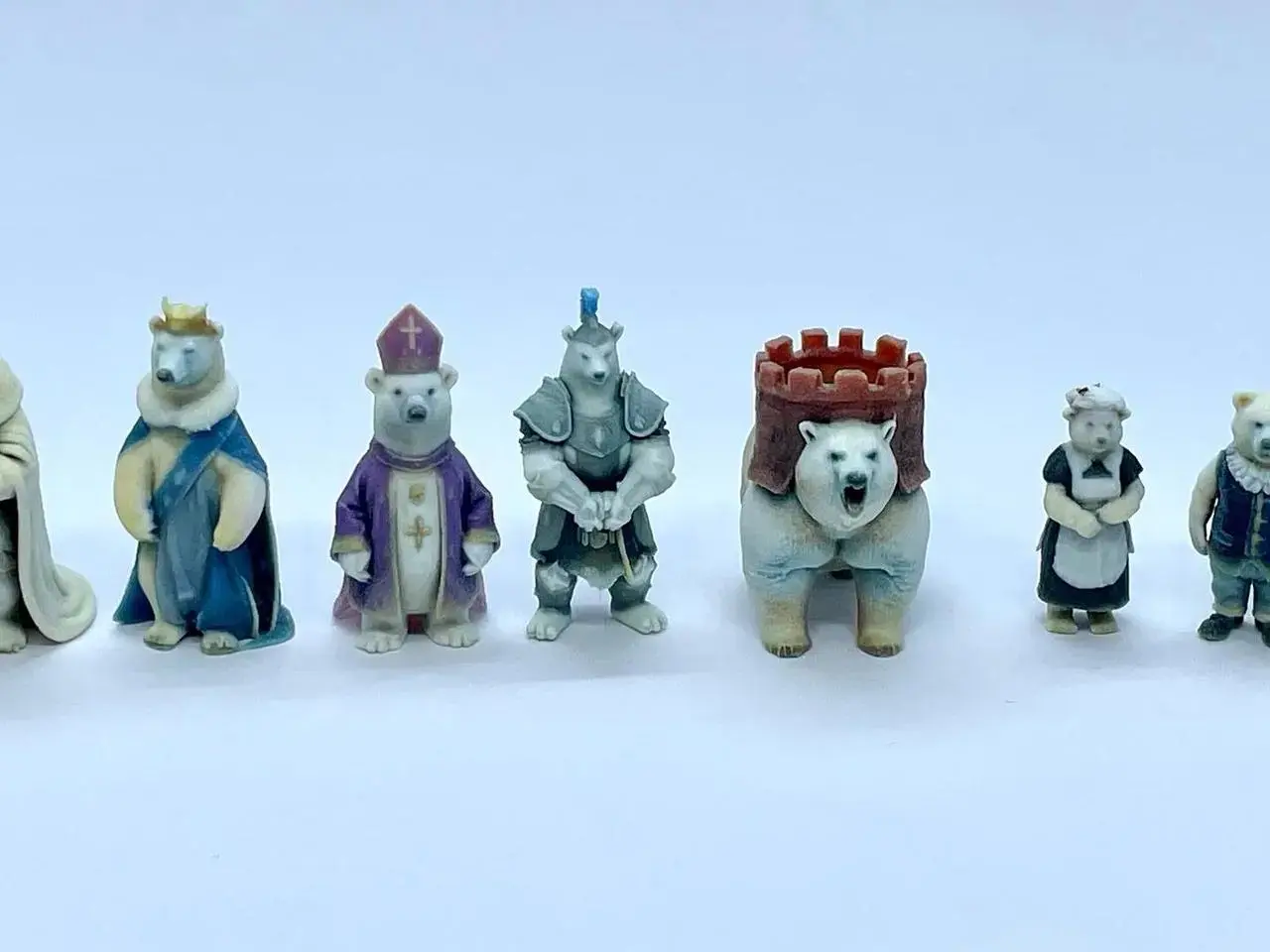
This workflow has enabled the creation of diverse assets, from Australian police officers in accurate uniforms to highly stylized projects. Recently, the team experimented with an anthropomorphic "North vs. South" chess set. Since the theme is based on the North Pole versus the South Pole, the pieces are Polar Bears and Penguins. Entirely generated and textured in Meshy, the set features a complete lineup including King, Queen, Bishop, Knight, Rook, and Pawns, all printed in full color.
Achieving Lifelike Quality
For a service bureau focused on high-end miniatures, the visual fidelity of the print is paramount. West Edge 3D notes that recent iterations of Meshy have significantly improved the proportions of human figures, moving away from the cartoon-like results of earlier tests.
Beyond geometry, the texture quality has proven to be a game-changer. The generated models feature lifelike details and shadows that, when printed on the polyjet system, can rival the very best hand-painted figurines. This digital capability allows West Edge 3D to offer a wider range of characters that can be reproduced exactly in multiples and at various scales, meeting the precise needs of their international clientele.
Future Plans: Better Prints and New Technologies
Looking forward, West Edge 3D plans to further enhance their production capabilities. They aim to bring a Japanese-made Mimaki 3DUJ-553 printer online in 2026. The combination of reduced material costs and a larger build volume provided by this upgrade will significantly enhance the production of Meshy-generated assets, delivering superior results for both internal projects and client commissions.
Additionally, while their current success has been largely with text-to-3D, they intend to utilize the feature more frequently as it continues to mature and become more reliable, further integrating digital generation into their manufacturing pipeline.