TL;DR
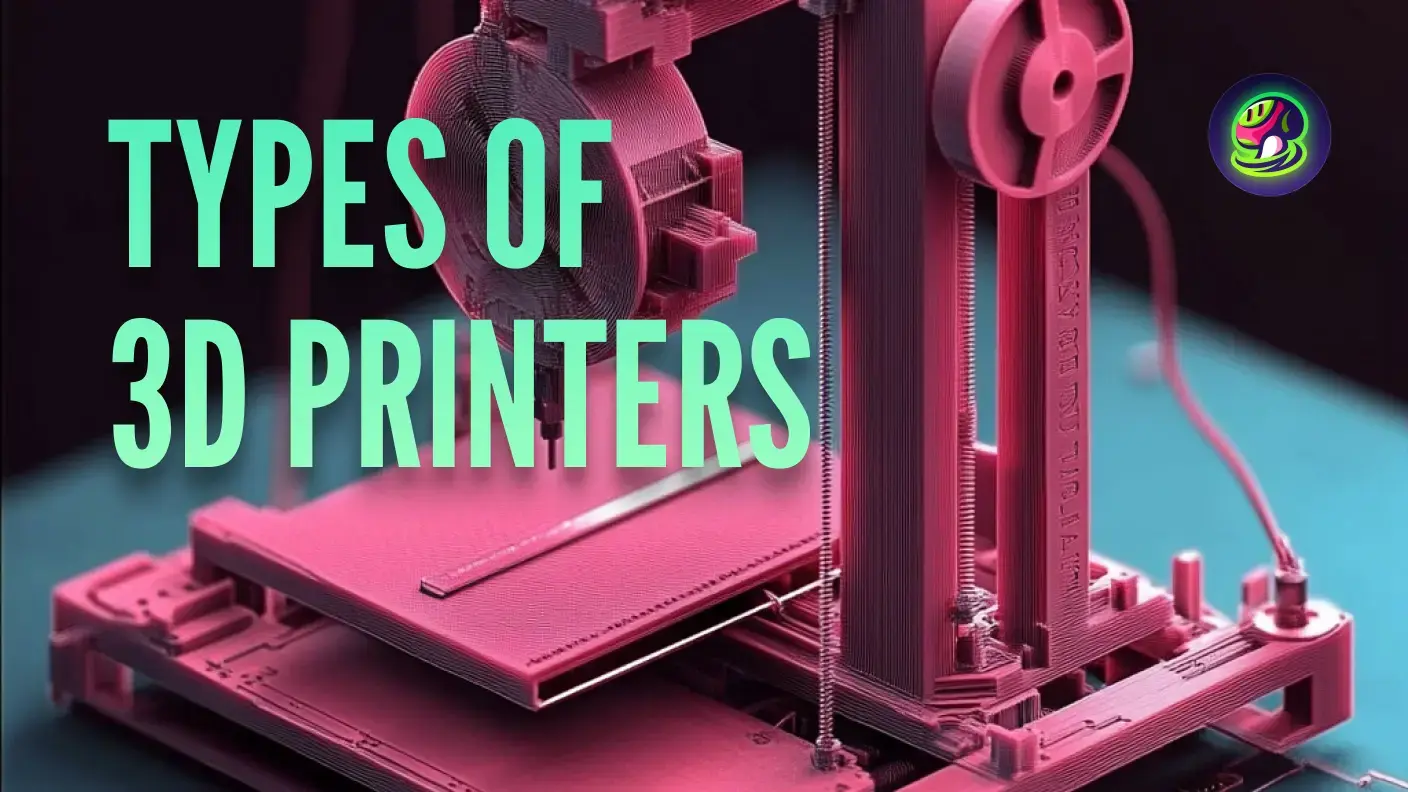
- There are seven process families in ISO/ASTM 52900. This guide covers the six you can still buy — LOM, the paper form of sheet lamination, has no commercial machine left — and splits them into the ten categories buyers actually choose between: FDM, SLA/MSLA, SLS, DLP, MJF, PolyJet, DMLS/LPBF, EBM, binder jetting and DED.
- For a home workshop: FDM. A sub-$300 CoreXY printer now matches what a $1,000 machine did in 2023.
- For fine detail: MSLA (masked-LCD resin) — 14–20 µm pixels for the price of a monitor.
- For production parts: SLS, MJF or metal LPBF, depending on material and volume.
- Two changes since 2024: LOM is no longer commercially available and has been replaced in this list by directed energy deposition (DED), and consumer "SLA" printers are almost all MSLA, not laser SLA.
Understanding the types of 3D printers matters more in 2026 than it did two years ago, because the entry prices have collapsed and the marketing has blurred the categories. A $299 desktop printer and a $500,000 metal machine are both called "3D printers", and a "16K resin printer" and a "16K industrial SLA system" have almost nothing in common beyond the word.
This guide explains how each of the ten technologies works, what it is actually used for, what it costs, and which brands still sell it in 2026. If you are shopping rather than studying, the budget 3D printer guide and the resin printer guide cover specific machines.
The 10 Types of 3D Printers Compared
| Technology | Materials | Typical layer height | Typical build volume | Cost tier | Best for |
|---|---|---|---|---|---|
| FDM / FFF | PLA, PETG, ABS, ASA, TPU, PA-CF | 50–300 µm | 200–350 mm cube | $ | Prototypes, jigs, large parts |
| SLA / MSLA | Photopolymer resin | 25–100 µm | 100–300 mm | $–$$$ | Fine detail, casting patterns |
| SLS | PA12, PA11, TPU, PP, glass-filled PA | 60–120 µm | 165–380 mm | $$$ | Functional parts, small batches |
| DLP | Photopolymer resin | 25–100 µm | 50–200 mm | $$–$$$$ | Dental, jewellery, precision |
| MJF | PA12, PA11, PA12GB, TPU, PP | 80 µm | 380 × 284 × 380 mm | $$$$ | PA12 production parts |
| PolyJet | Photopolymer, multi-material | 14–27 µm | 140–200 mm | $$$$ | Multi-material, multi-color models |
| DMLS / LPBF | Steel, aluminium, titanium, Inconel, CoCr | 20–60 µm | 250–400 mm | $$$$$ | Aerospace, medical, conformal cooling |
| EBM | Titanium, CoCr, Inconel | 50–200 µm | 200–300 mm | $$$$$ | Aerospace titanium, implants |
| Binder jetting | Sand, stainless/bronze, ceramics | 35–100 µm | up to 800 × 500 × 400 mm | $$$–$$$$$ | Sand casting molds, metal at scale |
| DED | Wire or powder: Ti, Inconel, steel | 500–3000 µm | metre-scale | $$$–$$$$$ | Large near-net parts, repair |
Cost tiers are order-of-magnitude: $ under $1,000, $$ $1,000–$25,000, $$$ $25,000–$100,000, $$$$ $100,000–$500,000, $$$$$ above $500,000. Layer heights and build volumes are typical ranges, not limits — every category has outliers in both directions.
1. Fused Deposition Modeling (FDM)
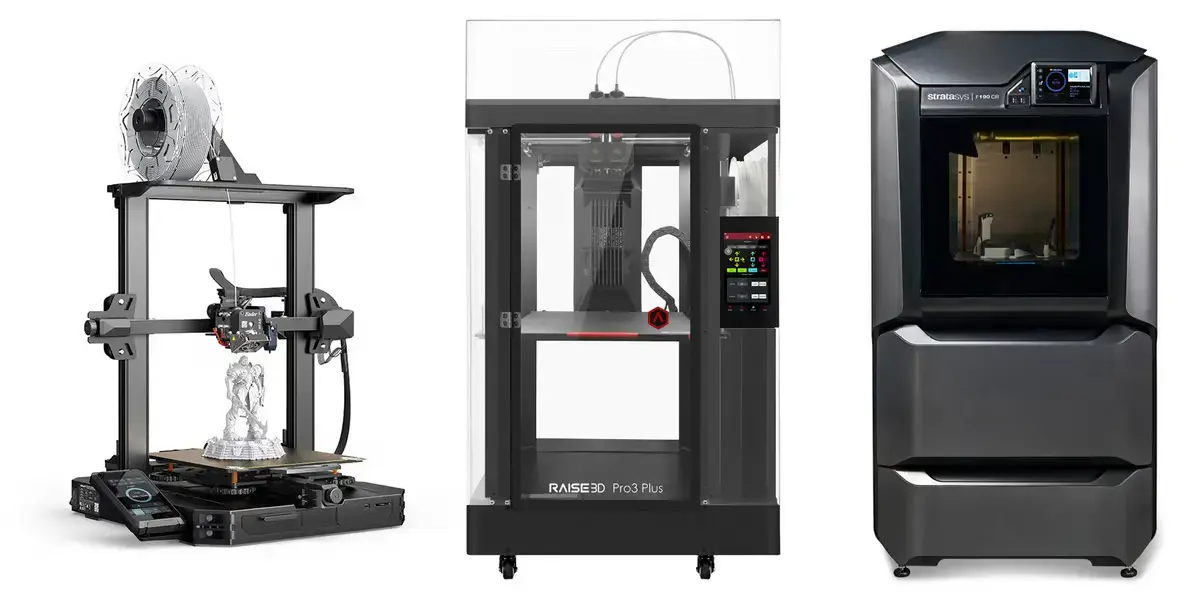
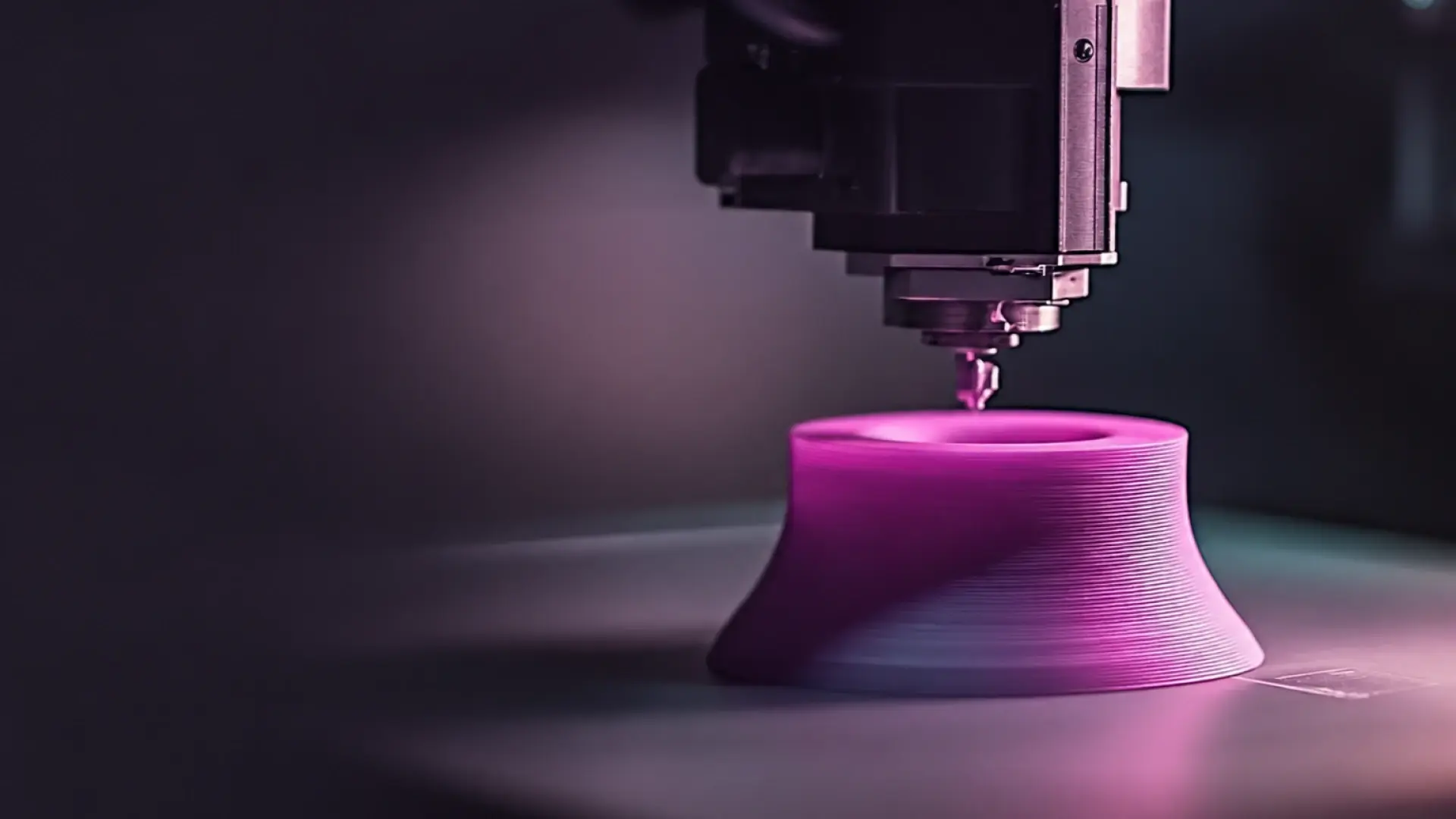
- Technology: A heated nozzle extrudes molten thermoplastic filament, layer by layer.
- Materials: PLA, PETG, ABS, ASA, TPU, polycarbonate, nylon and carbon-fiber-filled blends.
- Strengths: The cheapest and most repairable technology, with the widest material choice at consumer prices.
- Weaknesses: Visible layer lines, anisotropic strength (parts are weaker across layers) and a need for supports on overhangs.
- Best for printing: functional parts, jigs, enclosures, toys and props up to a few hundred millimetres — and the technology most generated models end up on, since a text prompt exports as 3MF without redrawing.
FDM is what most people mean by "3D printer", and in 2026 it is also the most exciting category. The move to CoreXY motion and Klipper firmware pushed consumer print speeds from about 60 mm/s in 2023 to a rated 500–600 mm/s, and multicolor filament changers — Bambu's AMS, Creality's CFS, Elegoo's CANVAS, Anycubic's ACE — turned four-color printing into a $329 feature rather than a $1,000 modification.
The other 2026 shift is full-color FDM: Creality's K3 uses four CMYK nozzles to print actual color rather than swapping filament, which is a different answer to the same problem: real color rather than swapped filament. For the current crop of multicolor machines, see our multi color printer guide.
Top FDM 3D Printer Brands in 2026
Bambu Lab
Bambu Lab set the pace for consumer FDM and still leads on the polish of the whole system: the P2S and X2D replaced the P1S and X1 in 2026, the H2D adds a 350mm enclosed chamber, and the AMS 2 Pro holds four spools and dries filament. The trade-off is a closed ecosystem.
Prusa Research
Prusa Research is the open, repairable alternative. The CORE One+ is a fully enclosed 250 × 220 × 270 mm CoreXY machine with a 55 °C chamber and an optional HEPA filter; the MK4S is the cheaper open-frame option. Every part is documented and replaceable.
Creality
Creality covers the whole price range, from the $179 Ender-3 V3 SE to the $1,199 K2 Plus Combo with its 350mm enclosed chamber and 16-color ceiling. Creality is also the most aggressive on new mechanisms — the K3's four-nozzle CMYK head is a Creality first.
Elegoo
Elegoo moved from resin into FDM and now competes on price-per-feature: the Centauri 2 series starts at $299, and the Centauri 2 Combo bundles a four-color changer for $329.
Anycubic
Anycubic ships the Kobra series, including the Kobra X with four colors built into the printer itself rather than in a separate unit — the cheapest way to get multicolor without an add-on box.
2. Stereolithography (SLA) and MSLA
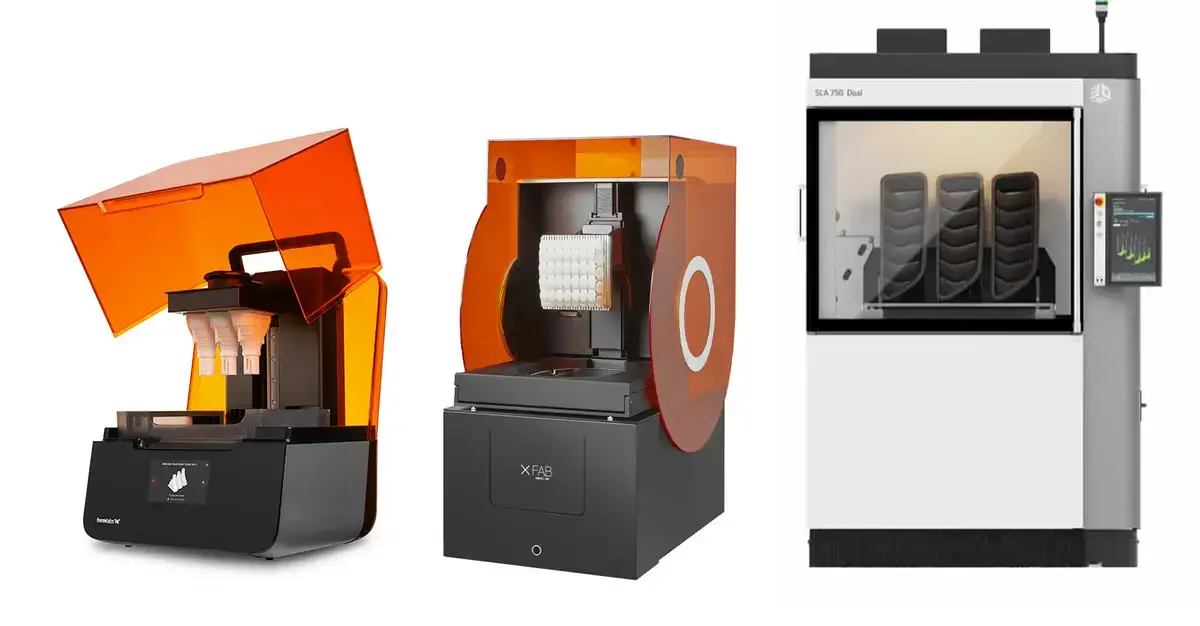
- Technology: Vat photopolymerization. True SLA scans a UV laser across resin; MSLA (masked stereolithography) flashes an entire layer through a monochrome LCD.
- Materials: Acrylate and epoxy photopolymers, plus tough, castable, dental, medical and ceramic-filled resins.
- Strengths: The highest detail available at consumer prices — 14–20 µm pixels on a $399 machine.
- Weaknesses: Brittle parts unless you choose an engineering resin, a messy post-process, and real chemical-safety requirements.
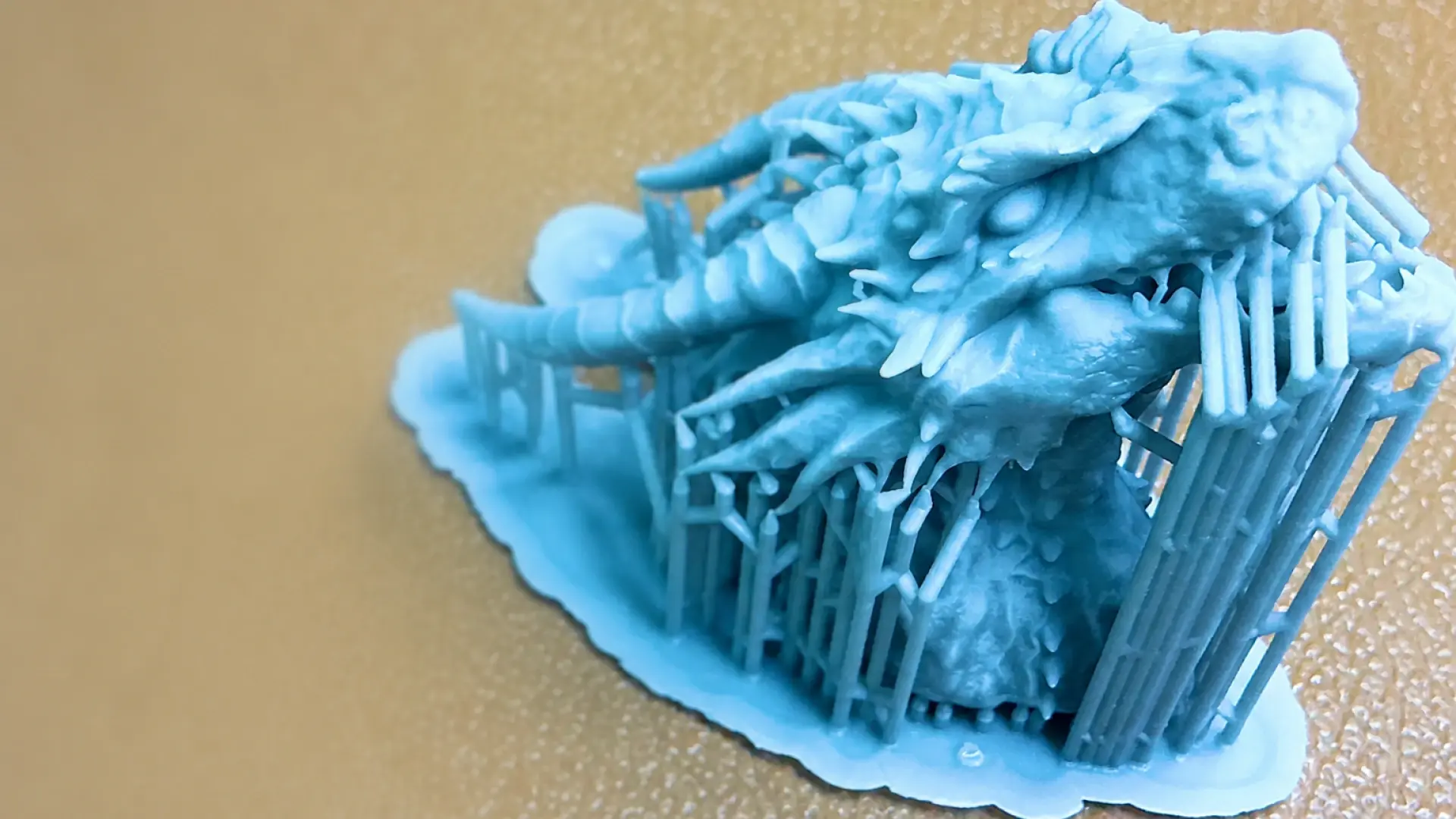
- Best for printing: miniatures, tabletop figures, jewellery masters and dental models — anything whose detail is finer than about 0.5 mm; this is where Meshy-generated characters and figurines are usually printed, with hollowing and supports added in the slicer.
This is the category where the naming matters most. Almost every consumer "SLA" printer sold in 2026 is actually MSLA: a monochrome LCD masks a UV LED array instead of steering a laser. It is faster and cheaper than laser SLA, and it is why a 16K resin printer costs $399. True laser SLA still exists, but it is industrial equipment — 3D Systems' SLA 825 has an 830 × 830 × 550 mm build envelope and a five-figure price.
The practical consequence for buyers: compare microns of XY pixel size, not the screen's "K" rating. A 16K screen on a 212 mm plate resolves 14 × 19 µm; the same 16K on a 300 mm plate resolves 20 × 26 µm.
Top SLA and MSLA 3D Printer Brands in 2026
Formlabs
Formlabs is the reference for validated resin work: the Form 4 pairs a 50 µm pixel with Open Material Mode, more than twenty validated resins and dental and medical material lines. Its $699 Form Studio 1, launched in October 2026, moved the prosumer resin floor under $1,000 for the first time.
Elegoo
Elegoo owns the consumer price curve: the Saturn 4 Ultra 16K at $399 in sale, the 18 µm Mars 5 Ultra at $259 and the $179 Mars 5.
Phrozen
Phrozen targets miniatures and tabletop printing with the Sonic Mighty and Mega lines, up to the 16K Mighty with a heated chamber.
3D Systems
3D Systems is the industrial end — laser SLA systems for production-grade parts, dental models and investment-casting patterns at build volumes consumer machines cannot reach.
3. Selective Laser Sintering (SLS)
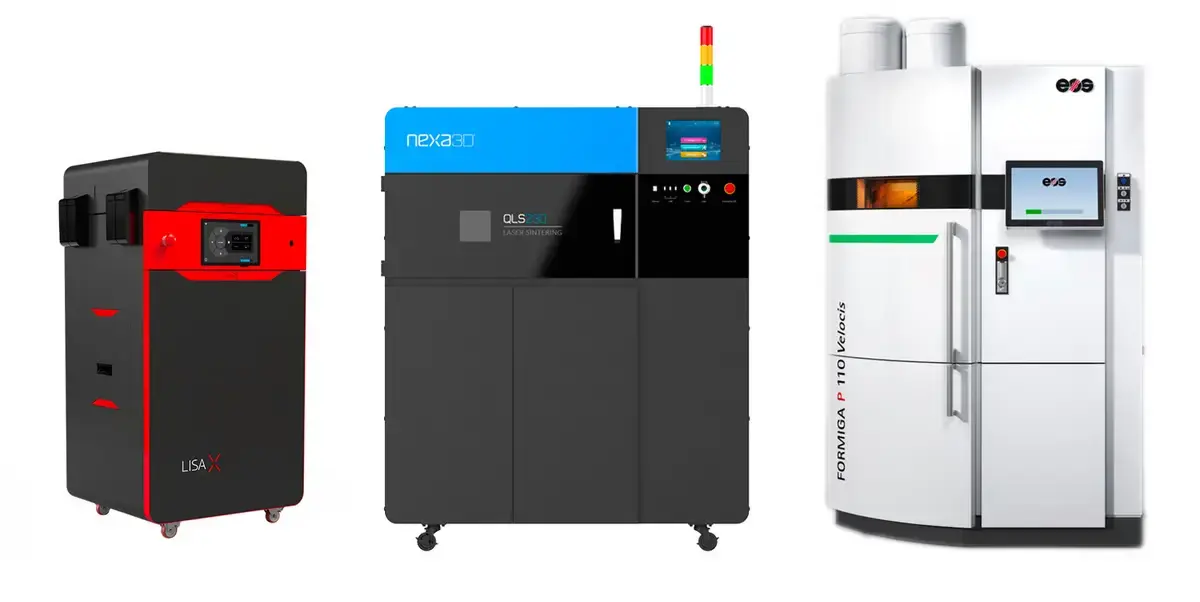
- Technology: A laser sinters polymer powder into a solid. Unsintered powder supports the part, so no support structures are needed.
- Materials: Mostly PA12, plus PA11, TPU, polypropylene and glass-filled nylons.
- Strengths: Strong, isotropic, support-free parts with complex geometry — the closest thing to injection-molded nylon.
- Weaknesses: Expensive machines and powder, a rough surface finish, and part costs that only make sense in batches.
- Best for printing: nylon brackets, ducts, living hinges and small production batches that need isotropic strength with no supports — a generated shape can seed the design, but expect CAD cleanup before it goes into a powder bed.
SLS is the workhorse of functional prototyping. Because the powder bed supports the part, you can nest a dozen parts in one build with no support removal, which is why it dominates small-batch production of brackets, ducts and housings.
Top SLS 3D Printer Brands in 2026
EOS
EOS is the industrial standard, with the P 500 and P 396 covering production volumes and a broad polymer portfolio.
Formlabs
Formlabs brought SLS to the benchtop with the Fuse 1+ 30W, and in June 2026 added the Fuse X1 — a 330 × 330 × 565 mm large-format system at $84,999 that puts SLS in the same room as a mid-size production cell.
Farsoon
Farsoon builds large-frame polymer and metal systems, and has grown quickly on the back of production-scale SLS in Asia and Europe.
Sinterit
Sinterit is the compact end — the BIANCO2, launched in May 2026, is aimed at small workshops and dental labs that need SLS parts without an industrial floor.
3D Systems
3D Systems sells the SLS 300 and SLS 380 for production nylon parts.
4. Digital Light Processing (DLP)
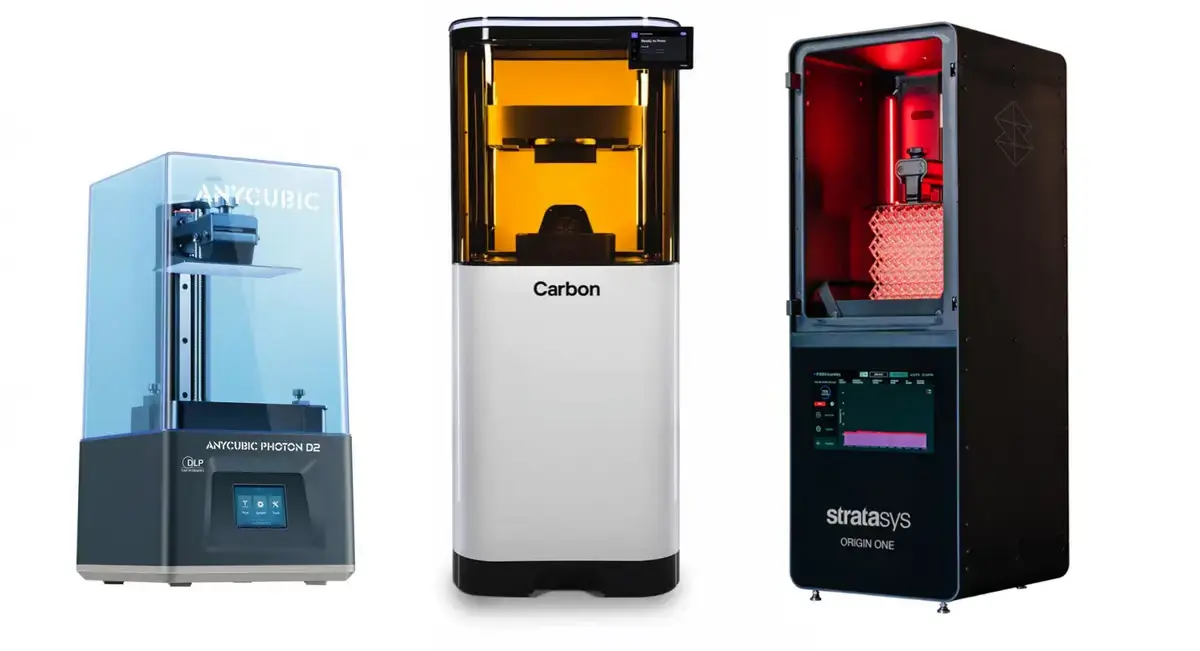
- Technology: A digital micromirror device (DMD) projects a whole layer of UV light into resin at once.
- Materials: Dental, medical, castable jewellery and precision-engineering photopolymers.
- Strengths: Fast whole-layer exposure with consistent pixel geometry across the plate.
- Weaknesses: Small build envelopes, expensive projectors, and a shrinking consumer presence as MSLA took over.
- Best for printing: dental models and guides, hearing-aid shells and castable jewellery patterns, where pixel consistency across the plate matters more than build size; a generated jewellery concept can go from prompt to castable resin without redrawing the shape.
DLP and MSLA solve the same problem — expose a whole layer at once — with different light engines. DLP uses a projector and a mirror array; MSLA uses an LCD mask. In 2026 MSLA owns the consumer market on cost, while DLP survives where pixel consistency and long projector life matter: dental models and guides, hearing-aid shells, jewellery casting patterns and hybrid systems that combine a laser with a projector.
The 2025-era claim that DLP is "faster than SLA with comparable detail" is true but no longer the point; the point is that if you are buying a resin printer for a home workshop, you are buying MSLA.
Top DLP 3D Printer Brands in 2026
Asiga
Asiga is the precision benchmark for dental and jewellery DLP, with the MAX 2 series and open material compatibility.
Stratasys
Stratasys sells the Origin P3, a DLP-based system aimed at production dental and medical parts.
B9Creations
B9Creations builds DLP systems for jewellery, dental and engineering with a strong focus on castable and biocompatible resins.
Cubicure
Cubicure (acquired by Align Technology in 2024) makes hot lithography DLP systems for high-viscosity, high-performance resins — a genuinely different capability from consumer resin printing.
5. Multi Jet Fusion (MJF)
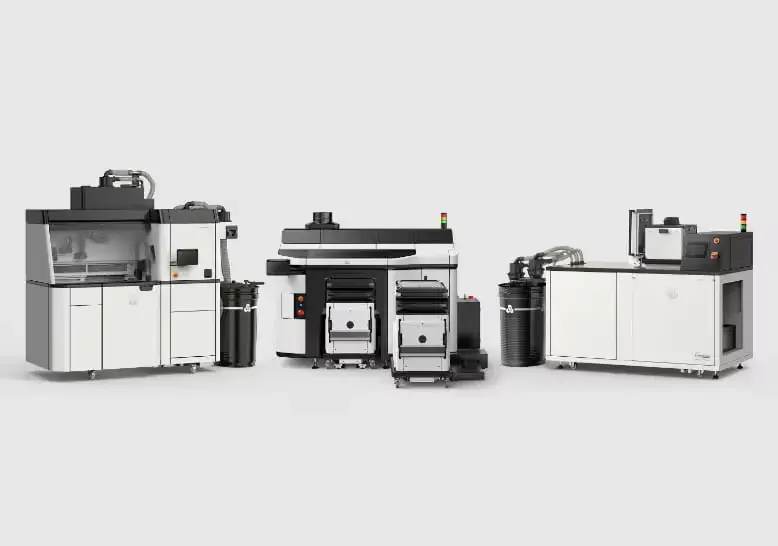
- Technology: HP's powder-bed process: an inkjet array deposits a fusing agent and a detailing agent onto each powder layer, and an infrared lamp fuses the treated areas.
- Materials: HP-qualified PA12, PA11, PA12 glass beads, TPU and polypropylene.
- Strengths: Fast, consistent, isotropic PA12 parts with fine detail and no support structures.
- Weaknesses: One vendor, HP-qualified powders only, and an expensive machine that needs volume to justify.
- Best for printing: PA12 enclosures, jigs and brackets in runs of a few hundred, where nesting density decides the per-part cost.
MJF is not a type of SLS, which is the single most common error in older "types of 3D printers" articles. It is a proprietary HP process with its own agent chemistry, and HP is the only company that sells MJF machines. Its nearest competitor is Stratasys' SAF process on the H350 — also a powder-bed agent-plus-infrared process, and also not MJF.
Top MJF 3D Printer Brands in 2026
HP
HP is the only MJF vendor. The Jet Fusion 5200 and 5600 series cover production volumes at 380 × 284 × 380 mm, and the MJF 1200, announced in April 2026, brings a 12-litre build chamber to smaller production floors — commercial availability is scheduled for early 2027.
Stratasys (SAF, not MJF)
Stratasys is the closest alternative, with the H350 using selective absorption fusion. It occupies the same production-PA12 slot and uses different chemistry; it is included here because buyers compare the two directly.
6. PolyJet
- Technology: Inkjet printheads deposit liquid photopolymer droplets, cured by UV light after each pass.
- Materials: Vero, Agilus, Digital ABS, biocompatible MED610 and dental resins, in combinations within a single part.
- Strengths: Multi-material and multi-color parts with 14–27 µm layers and smooth surfaces — the best-looking prototype technology.
- Weaknesses: Expensive materials, limited strength, and support removal that needs a water jet.
- Best for printing: multi-material, multi-colour review models with smooth surfaces — over-moulded grips, medical models and design prototypes.
PolyJet's defining feature is that it prints several materials at once, in gradients. That makes it the standard for anatomical models, dental guides, over-molded prototypes and full-color concept models, where a single print has to show a soft grip on a rigid body.
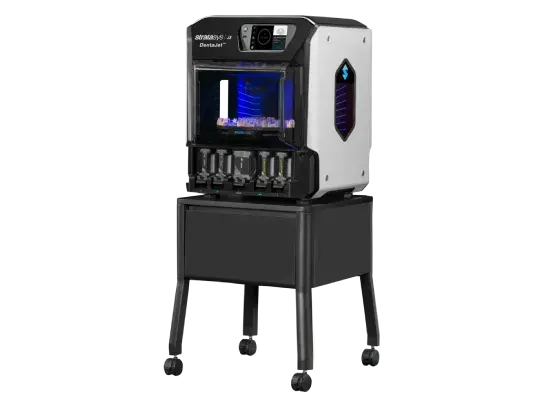
Two corrections to the 2024 version of this article: PolyJet was never rebranded — Stratasys still calls it PolyJet, and the J-series is the printer family — and "PolyJetJ3 DentaJet" is not a product. The real machine is the Stratasys J3 DentaJet.
Top PolyJet 3D Printer Brands in 2026
Stratasys
Stratasys is the only PolyJet vendor. The current family runs from the J3 DentaJet (140 × 200 × 190 mm, 18 µm layers) and J5 DentaJet for dental labs, through the J35 Pro and J55 Prime for office prototyping, to the J850 for full-color multi-material work.
7. Direct Metal Laser Sintering (DMLS) and Laser Powder Bed Fusion (LPBF)
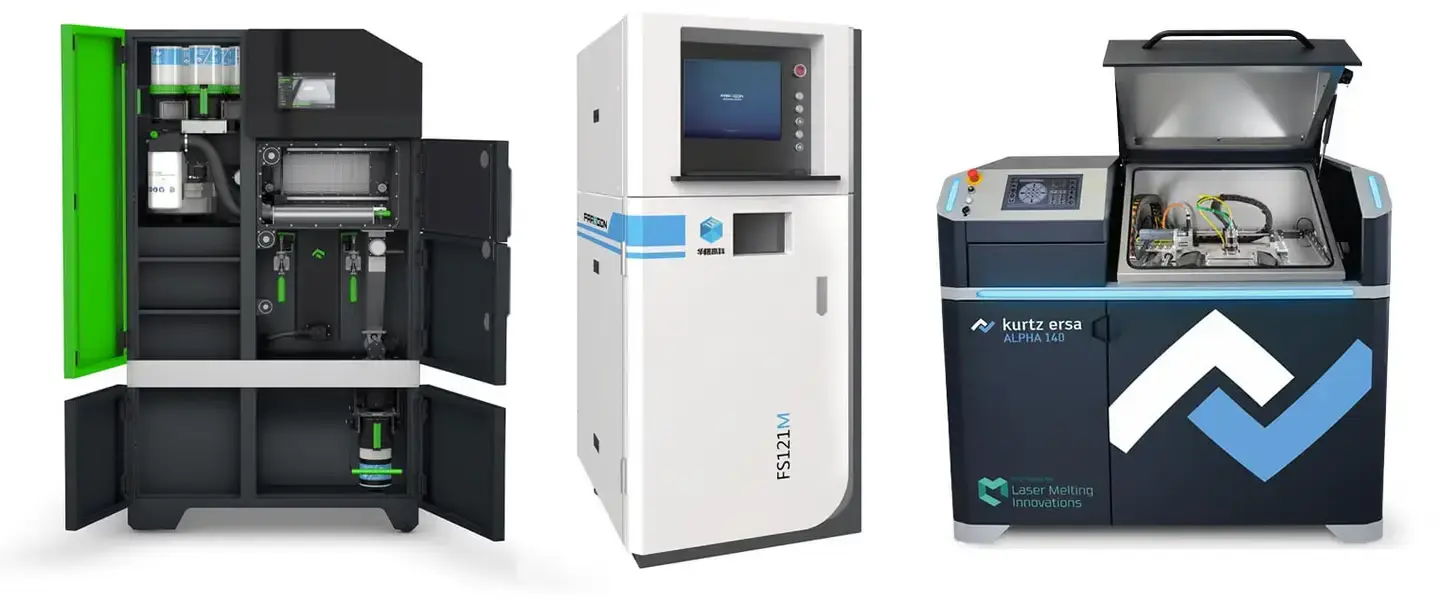
- Technology: A laser melts metal powder, layer by layer, in an inert atmosphere.
- Materials: Stainless and tool steels, aluminium alloys, titanium, Inconel, cobalt chrome and copper.
- Strengths: Complex metal geometry with no tooling — conformal cooling channels, lattices and consolidated assemblies.
- Weaknesses: Six-figure machines, support structures, post-processing (stress relief, HIP, machining) and real powder-handling safety requirements.
- Best for printing: metal parts that carry load or heat, such as aerospace brackets, conformal-cooling moulds and surgical implants.
"DMLS" is a trade name; the generic process is laser powder-bed fusion, and the two are used interchangeably. The distinction that matters for buyers is machine architecture and material qualification, not the acronym.
Top DMLS and LPBF 3D Printer Brands in 2026
EOS
EOS remains the broadest metal platform, with the M 290 as the reference mid-format system and a deep alloy portfolio.
Nikon SLM Solutions
Nikon SLM Solutions builds multi-laser production systems such as the NXG 600E. The Nikon ownership has not changed the product line, though the division took a large impairment in early 2026.
Renishaw
Renishaw sells the RenAM 500D and remains the engineering-led option, with a strong focus on in-process monitoring.
3D Systems
3D Systems covers the DMP Flex and DMP Factory platforms for precision metal parts.
Colibrium Additive
Colibrium Additive is the former GE Additive. The Concept Laser and Arcam brand names were retired in 2024, and its metal systems now sell under the Colibrium name.
8. Electron Beam Melting (EBM)
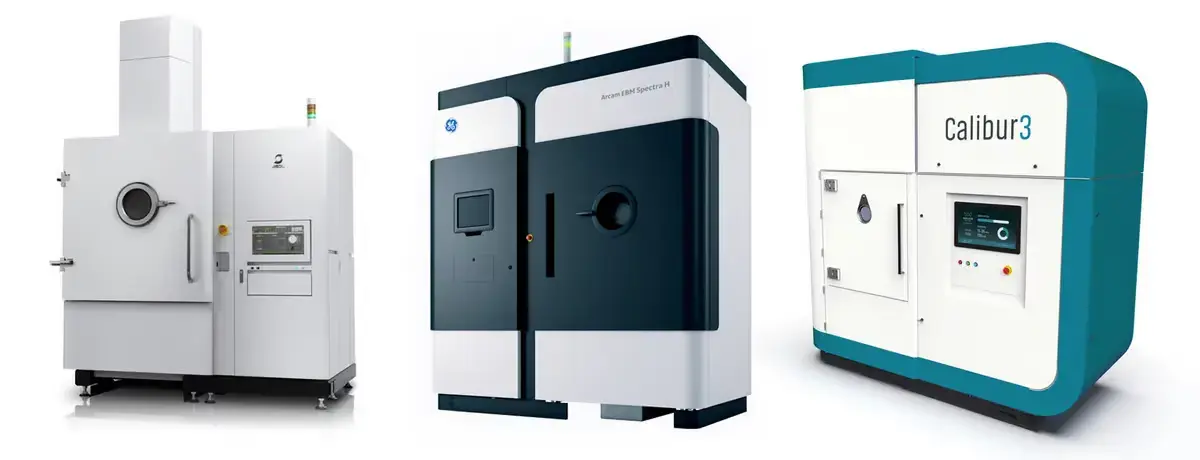
- Technology: An electron beam melts metal powder in a vacuum, with the build plate kept hot throughout.
- Materials: Titanium alloys, cobalt chrome, Inconel and copper.
- Strengths: Low residual stress, high density and fast deposition in titanium — the process that made printed aerospace brackets and acetabular cups routine.
- Weaknesses: Few vendors, vacuum-chamber complexity and a surface finish that needs machining.
- Best for printing: large titanium structures where deposition speed matters more than surface finish — aerospace frames and orthopaedic implants.
EBM's hot process is its advantage: because the powder bed stays at a high temperature, parts come out with far less residual stress than laser fusion produces, which matters for titanium. That is why it is concentrated in aerospace and orthopaedics rather than general manufacturing.
Top EBM 3D Printer Brands in 2026
Colibrium Additive
Colibrium Additive is the home of EBM after the Arcam brand was retired in 2024. The Spectra series covers production titanium parts.
Wayland Additive
Wayland Additive builds the Calibur3, a 300 × 300 × 450 mm electron-beam system that targets the same titanium and CoCr work with a different beam strategy.
Freemelt
Freemelt takes a different route again, using an electron beam to fuse powder for small, high-value parts and material development.
9. Binder Jetting

- Technology: An inkjet head deposits a liquid binder into a powder bed; the resulting "green" part is then cured, sintered or infiltrated.
- Materials: Silica sand for casting molds and cores, stainless/bronze blends, tungsten carbide and ceramics.
- Strengths: Very fast for large parts, full-color sand molds, and lower cost per part than laser fusion at volume.
- Weaknesses: The green part is fragile, sintering introduces shrinkage you must compensate for, and metal binder jetting is still a developing production route.
- Best for printing: sand moulds and cores for metal casting, plus metal and ceramic parts at production volume.
Sand casting is where binder jetting earns its keep: a printed mold or core replaces a pattern and a week of foundry tooling, so a single complex casting becomes a two-day job. Metal binder jetting is the other story — cheaper per part than LPBF at volume, but with a sintering step that carries the dimensional risk.
The vendor landscape changed a lot in 2025–2026: ExOne and voxeljet now sit under one holding company, Desktop Metal's assets were acquired out of bankruptcy, and Markforged's metal binder-jet business was carved out when Stratasys agreed to buy the rest of the company. Check who actually owns support for a machine before buying one.
Top Binder Jetting 3D Printer Brands in 2026
HP
HP sells the Metal Jet S100, a 430 × 309 × 200 mm metal binder-jet system with 35 µm layers.
ExOne Global Holdings
ExOne and voxeljet are now under the same holding company, which means the sand-casting lineup (S-Max Pro, X1 160Pro, VX1300 X) has one owner and one support path.
Desktop Metal
Desktop Metal's systems are now supported by Arc Impact, which acquired the assets in 2025. Verify the service agreement and spare-parts path before buying a used machine.
3D Systems
3D Systems sells ColorJet full-color binder jetting for visual and architectural models.
10. Directed Energy Deposition (DED)
- Technology: A focused laser, electron beam or electric arc melts metal as it is deposited — from wire or powder — onto a substrate or an existing part.
- Materials: Titanium, Inconel, steel and aluminium, most commonly as wire.
- Strengths: Metre-scale parts, high deposition rates, and the ability to add metal to an existing component for repair.
- Weaknesses: Coarse resolution (0.5–3 mm layers), so every part needs machining; and the process is not a powder bed, so it needs different design rules.
- Best for printing: metre-scale near-net shapes and repairs on existing metal parts, which no powder-bed machine can hold.
DED replaces laminated object manufacturing (LOM) in this list, and the swap is the biggest change from the 2024 version. LOM — gluing and cutting sheets of paper or foil — has no commercial vendor left: Mcor has been dormant since 2019, Helisys is long defunct, and the sheet-lamination technology that survives (ultrasonic additive manufacturing) is a metal process, not paper. It is still taught in engineering courses, but you cannot buy one.
DED, by contrast, is one of the seven ISO/ASTM 52900 process families and the only one the 2024 list was missing. It is how large near-net metal shapes and turbine-blade repairs are made.
Top DED 3D Printer Brands in 2026
Trumpf
Trumpf sells laser metal deposition systems with powder and wire heads, integrated into production cells.
Meltio
Meltio is the accessible end — wire-laser DED heads that mount on a robot or a CNC frame, used for large metal parts and repair.
Norsk Titanium
Norsk Titanium commercialised wire-arc DED for aerospace titanium structural parts, and its parts fly on Airbus programs.
Sciaky
Sciaky builds electron-beam wire DED systems for very large structures — the metre-scale end of the category.
Choosing the Right 3D Printer for Your Needs
When deciding on a 3D printer, the technology matters less than these six questions:
- What is the part for? A visual prototype, a functional bracket and a casting pattern point at three different technologies.
- How big is it? Build volume is the constraint that most often forces a technology change, not price.
- How fine is the detail? Compare XY resolution in microns for resin and layer height in microns for everything else.
- What material properties do you need? Isotropic strength and heat resistance rule out most consumer FDM; optical clarity rules out SLS.
- How many parts? One part favors FDM or resin; a hundred favors SLS, MJF or binder jetting.
- What does post-processing cost? Supports, washing, curing, depowdering, sintering and machining are often the largest line item.
For most home and small-business buyers the answer is FDM: a $299 CoreXY printer covers prototypes, jigs, enclosures and toys, and a $399 resin printer covers anything that needs detail. Industrial buyers should start from the material and the volume, then choose the process.
How Meshy Fits Into Each Process
Whatever the technology, the workflow starts with a model — and the bottleneck in 2026 has moved from modeling to print preparation. Meshy generates a watertight starting mesh from text or an image, which you then validate in a slicer:
- FDM: generate a model, export 3MF, check wall thickness and overhangs before slicing.
- SLA and MSLA: high-detail characters and miniatures benefit most from AI generation; hollowing and supports are added downstream.
- SLS and MJF: generated geometry is a concept, not a production part — expect CAD cleanup for wall thickness and depowder holes.
- DMLS, EBM and DED: the mesh needs thickening, support generation and CAM before a metal machine will accept it.
Our guide to print-ready models covers the checks that decide whether a generated model survives the slicer, and 3D modeling software for printing covers the CAD side when AI generation is not the right tool.
Frequently Asked Questions
What are the main types of 3D printers?
The seven process families in ISO/ASTM 52900 are material extrusion (FDM), vat photopolymerization (SLA, MSLA and DLP), powder bed fusion (SLS, DMLS and EBM), material jetting (PolyJet), binder jetting, directed energy deposition and sheet lamination. Consumer buyers mostly meet FDM and MSLA; industrial buyers also choose SLS, MJF, metal LPBF, binder jetting and DED.
What is the most common type of 3D printer?
FDM is by far the most common: it is the cheapest technology, the easiest to repair and the one sold in consumer stores. Almost every sub-$500 printer is FDM, and the entire multicolor and toolchanger market is FDM.
Is SLA the same as resin printing?
Roughly, but not precisely. "Resin printing" covers any vat photopolymerization process, which includes laser SLA, MSLA (masked LCD) and DLP. Nearly every consumer resin printer sold in 2026 is MSLA, not laser SLA — the LCD masks a UV light instead of steering a laser.
What is the difference between SLS and MJF?
SLS uses a laser to sinter polymer powder and is sold by many vendors. MJF is HP's proprietary process, which uses an inkjet head to deposit fusing and detailing agents that an infrared lamp then fuses. Both produce support-free PA12 parts; MJF is HP-only and requires HP-qualified powders.
Is LOM still used?
No. Laminated object manufacturing — stacking and cutting adhesive-coated sheets — has no commercial vendor left in 2026. Mcor has been inactive since 2019 and Helisys is long defunct. Directed energy deposition has replaced it in this list because it is a genuinely active process family with shipping machines.
Which type of 3D printer is best for a beginner?
FDM. A beginner needs a machine that prints reliably, uses cheap material and can be repaired, and a $299 printer now has automatic bed leveling, automatic calibration and a phone app. Buy resin only if the models you want are small and highly detailed, and read the safety requirements first.
What type of 3D printer do professionals use?
It depends on the output. Product designers use PolyJet for multi-material prototypes and SLS or MJF for functional parts. Dental and medical labs use MSLA, DLP or PolyJet depending on the material certification. Aerospace and medical implant manufacturers use metal LPBF, EBM or DED, and foundries use binder jetting for sand molds and cores.
Final Thoughts
The ten technologies in this list are not ten ways to do the same thing — they are ten different manufacturing processes that happen to share a software workflow. FDM is a workshop tool, MSLA is a detail tool, SLS and MJF are production tools, and metal powder-bed fusion is a factory.
Pick the process by the part, not by the printer's spec sheet. And if you are starting from nothing, start with FDM: it is the cheapest way to learn the workflow — model, slice, print, iterate — that every other technology builds on.